Books to Add to Your Fall Reading List
Fictional story about Anne Frank’s sister is among the unexpected reads.
By Sandee Brawarsky
Fall 2013
We can measure our years in stories, the ones we tell ourselves about our own lives and the ones we learn secondhand, passed through families or through books. Great storytellers who understand the nuances of narrative and language, the emotional complexity of every moment and the value of every life transform stories into art.
This fall’s crop of new books offers intriguing characters with unexpected and richly told stories. Some are stories within stories, whether of imagined lives or very real ones.
In (Norton), award-winning writer Dara Horn intertwines two stories set in different eras: one connected to Solomon Schechter and his search for the Cairo genizah, a repository of antique manuscript fragments, the other to a contemporary software designer who invents software called Genizah that categorizes and preserves the past, creating a personal archive of data. Ideas about memory and the uses of the past and present reverberate in—and between—the two tales.
Josie Ashkenazi, the software designer, is brilliant and magnetic, still aspiring to gold stars for her accomplishments as she did as a child. Her innovative Genizah software “made people think that the past still existed, that it was still part of the world they live in, that it was something that could be visited, preserved in perpetuity, like the mummified pharaohs in their tombs.”
In A Guide for the Perplexed, she reflects on Moses Maimonides’ important text of the same name and also touches on more earthly concerns such as sibling rivalry. Even as adults, Josie and her sister Judith are tightly connected, but their ties are strained by jealousy, competitiveness and unresolved conflicts that have ballooned over time to almost biblical proportions.
While her themes are universal, Horn embraces the Jewish aspects of her story, writing naturally about religion, her prose enriched by her knowledge of Yiddish and Hebrew. She stands out among her generation of Jewish-American writers.
This is Horn’s fourth novel and perhaps her finest. The 36-year-old mother of four published her first novel when she was 25. Her earlier books include and . In an author’s note, Horn, who was selected as one of Granta’s “Best Young American Novelists,” compares some of the fact and fiction related to the Cairo Genizah and to Moses Maimonides, also known as the Rambam, directing readers to other sources.
by Jillian Cantor (Riverhead) is a reimagining of the life of Anne Frank’s older sister Margot in America, as though she had slipped out of Europe rather than being murdered in Bergen-Belsen. In Cantor’s telling, Margot, now Margie Franklin, is living in hiding in Philadelphia. To protect her new identity, lying has become “like a second skin.”
Margot is no longer a young girl, no longer a Jew (although she continues to light a candle on Fridays at sundown, saying a prayer, telling herself it’s ritual, not religion). Even on the hottest days, she wears a sweater, covering the dark ink tattooed onto her forearm.
The novel opens in April 1959 as the film is being released to movie theaters and the is in store windows everywhere—but this is not the way Margot would have told their story. As Margie Franklin, she works as a legal secretary and lives in a studio apartment in a five-story brick building in Center City, Philadelphia, which reminds her of Amsterdam’s canal district. Philadelphia is the city where she and Peter van Pels, whose family was hidden with her own, promised they would meet, after.
Margot also kept a diary, now lost. This too is a story of long-standing sibling rivalry, of two people seeing the same small world in very different ways, and, now for the surviving sister, guilt as she remembers their final moments together. She realizes that everyone who has read the book or seen the movie believes that she too is dead. Still, she has not contacted her father, Otto Frank, who published the diary. In her own way, she deals with loss and the possibilities of happiness.
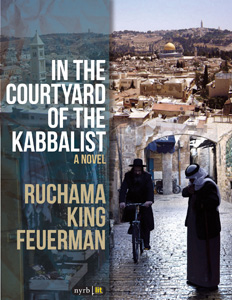 In Ruchama King Feuerman’s second novel, (NYRB Lit), she creates a compelling world within a world in Jerusalem. She conveys spiritual longings and the yearnings for human connection, all informed by the heavenly city and its mysteries.
“A month after his mother died,” she begins, “Isaac Markowitz, forty, plagued with eczema and living on the Lower East Side, sold his haberdashery at a decent profit and took an El Al flight to Israel.” Feuerman forms a web entangling Isaac: the wife of the kabbalist whose court he serves, an Arab worker named Mustafa who suffers for his physical deformity and a ba’al teshuva named Tamar who seeks counsel in the kabbalist’s court.
Originally from Nashville, Tenn., the author went to Israel on a one-way ticket when she was 17. Her first novel, , is also set in Israel. This novel was published first as an .
The epigraph of Feuerman’s book, a Hassidic saying, speaks to all of this season’s featured books, both fiction and nonfiction: “If I tell you my story,/you will listen for awhile/and then you will fall asleep./But, if, as I tell you my story,/you begin to hear your own story,/you will wake up.”
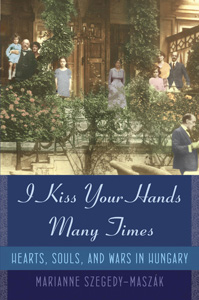 Two new memoirs explore family ties and, in particular, the powerful ways that people are brought together. Written in elegant prose evoking a time that is no more, Marianne Szegedy-Maszak describes the “big and visible lives” her family led in Hungary before World War II and before the family story became an American immigrant story. While others may have written similar stories, (Spiegel & Grau) covers new depths, with new insights into Hungary’s relationship with Jews and the still powerfully felt ripples of history.
Through a cache of letters from her father to her mother that Szegedy-Maszak found after their deaths (her mother’s responses are lost), she came to know things about her parents that she hadn’t had a clue about while they lived, and she sets out to document their stories. She tells of their lost world, the time they were together before he, a Christian, was sent to Dachau and she was forced into hiding (her wealthy, established family had converted to Catholicism to protect them, but were persecuted nonetheless). Her parents met again after the war and married; they came to America in 1946 when her father served as a Hungarian minister. A year later, he refused to recognize the new Communist government, and they stayed in the U.S. Theirs was a love story of “grandeur and tragedy,” she writes.
The author grew up in Washington, D.C., and says that she compensated for not understanding all the languages her parents spoke by becoming “fluent in understanding gestures, facial expressions, and emotions that were unexpressed, at least verbally.” After her parents’ deaths, she and her siblings sold the house they lived in for decades in Washington, which is now demolished. She remembers the “smell of cigarettes and dust and sherry, the heavy curtains separating rooms, the attic filled with mysterious papers and my grandmother’s lace trousseau.”
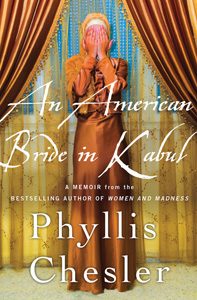 Some memoirs are stories of a lifetime; others are dramatic chapters of a life that reverberate beyond the time they cover. Phyllis Chesler’s astonishing (Palgrave) recounts her experience of marrying an Afghan man she met in college—an Omar Sharif lookalike who is charming, wealthy, and intriguing and tells her that she is the only woman who matters to him. She marries against the wishes of her traditional parents and returns with her new husband to Kabul, expecting a sophisticated life of culture, adventure, travel and love. Adventure it was, but not what she expected.
Chesler, now a pioneering feminist leader, scholar, psychotherapist and author of many books, including , recalls her younger, romantic, naïve self who is ultimately trapped in the most foreign of places, living with her new husband’s extended polygamous family, pressured to convert to Islam, and under a form of house arrest with no passport, rights and outside contacts.
Finally, she escapes, kissing the ground when she arrives back in America, and resumes a very different life, embracing Judaism and feminism. Years later, her ex-husband (he would still consider her his first wife even as he remarried) would also come to America with his new family, and they are still a part of her life.
Chesler’s voice is appealing and demonstrates her wisdom, courage, humor, willingness to see things from different sides, and how she turns her experience into a passion for helping other women. She kept a diary from these days, and the story is haunting for all of the “what ifs” the reader can’t help but think about.
Tania Grossinger tells of her “unconventional life well lived” in (Skyhorse). She is childless by choice and, with candor, explains how that has played out. She grew up at the iconic Catskill Resort Hotel, a cousin to the Grossinger family who ran it. Her mother was widowed when Tania was 6 months old. Over a life filled with interesting adventures, she has been a publicist and an author and has traveled widely; she has gotten to know well-known figures like Betty Friedan, Jackie Robinson and Ayn Rand. She’s also very open about a long and meaningful affair with a well-known married man.
Poetry too is a way of telling stories. In her debut collection of poetry, , Cheryl Moskowitz reflects on themes that engage many of us: childhood, relationships, domestic life, dealing with aging parents, and one’s own advancing years and love. Born in Chicago, she has lived in Great Britain since 1970 and has worked as an actor, performance poet, storyteller, therapist and teacher of writing in many settings, including prisons.
In “Asylum,” she writes, “I ask you about home/and you tell me/that home is where the river runs,/home is where the dates grow/ in bunches/and dry brown in the sun./Home is where your father/farms the land and drives his horses./Home is where you have a father,/or did have.”
Moskowitz’s way of seeing the world involves noticing deeply and choosing life, an inspiration as the New Year begins.
is an award-winning journalist and essayist. She is a book critic for The New York Jewish Week.