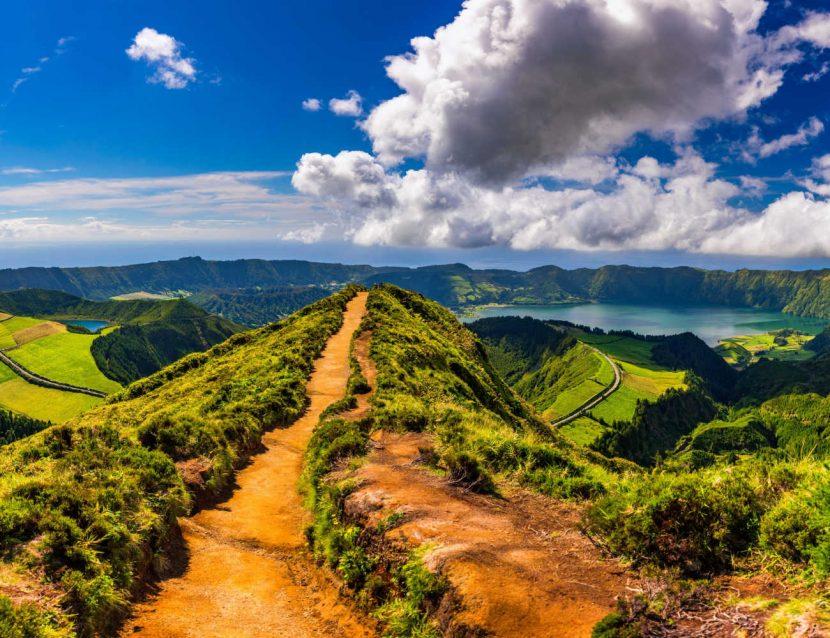
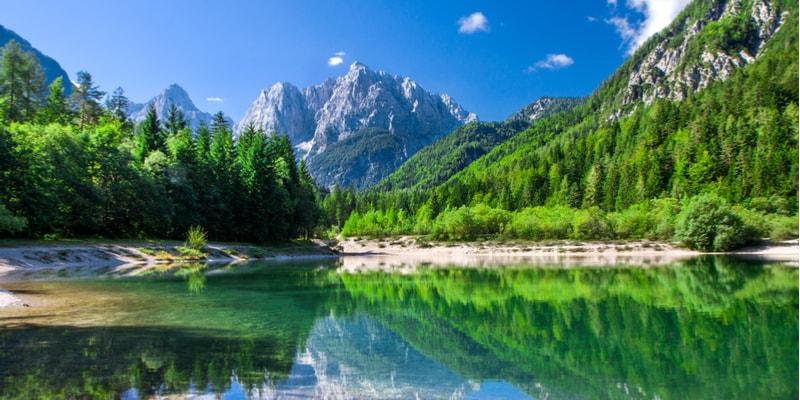
Slovenia, what to see? Slovenia is the green country of forests, nature reserves, silent valleys, mountain peaks, crystal-clear lakes and unspoilt coastlines. A still little-known place that surprises with the variety of its landscapes and the charm of its wilderness.
Situated between Western and Eastern Europe, Slovenia has Venetian ports on its coasts, Hungarian-style farms and Bavarian villages in the Julian Alps. Here is what to do and see at least once
Slovenia, what to see?
Ljubljana
Nova Gorica and the Vipava Valley
Mestni Park
Vipava Valley
Logarska dolina valley
Three Solčavsko valleys
Radovljica
Predjama Castle
Bled
Triglav National Park
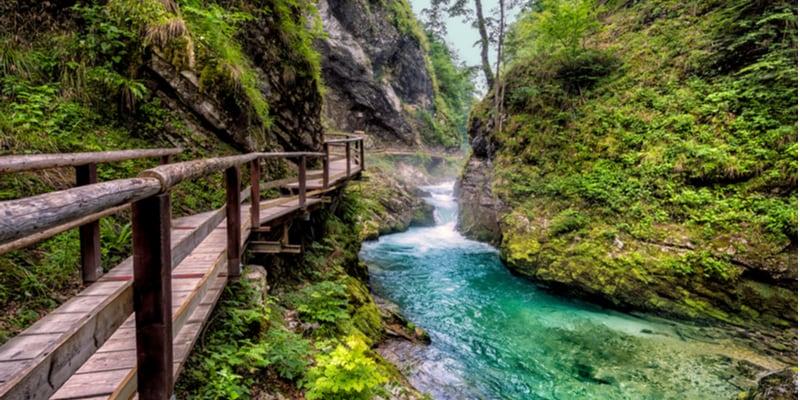
Vintgar Gorge
Piran
Postojna Cave
St. Kanzian Caves
Portorož
Beaches of Slovenia
Bohinj
Kolpa River
 "/>
"/>
Ljubljana 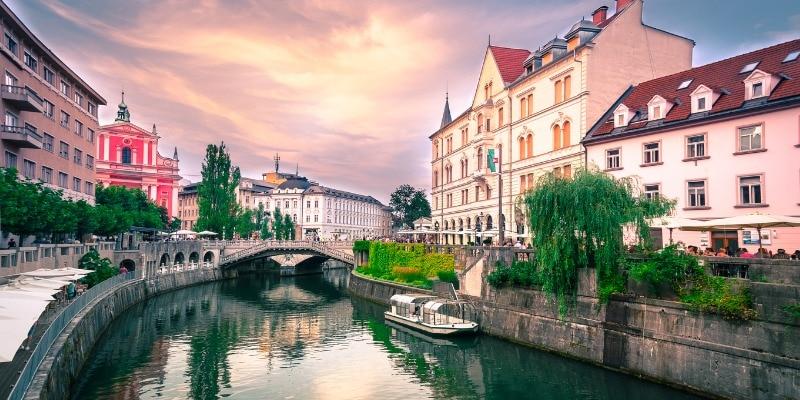 "/>
"/>
The capital of Slovenia is an increasingly lively city that can well rival the metropolises of Europe. Spend a day discovering the city on the river with picturesque bridges and fairytale views, designed largely by Ljubljana's famous architect, Jože Plečnik. As you stroll through the city you will encounter the Dragon Bridge, the Main Market, Plečnik's House, the house museum of the famous Ljubljana architect, the National Gallery which houses the largest collection of art from the early Middle Ages to the 20th century, Ljubljana Castle which dominates the entire city from a hilltop, the beautiful Baroque St Nicholas Cathedral and the picturesque Civic Square, the city centre. Named the European Green Capital in 2016, Ljubljana also has numerous parks and nature areas.
Nova Gorica and the Vipava Valley 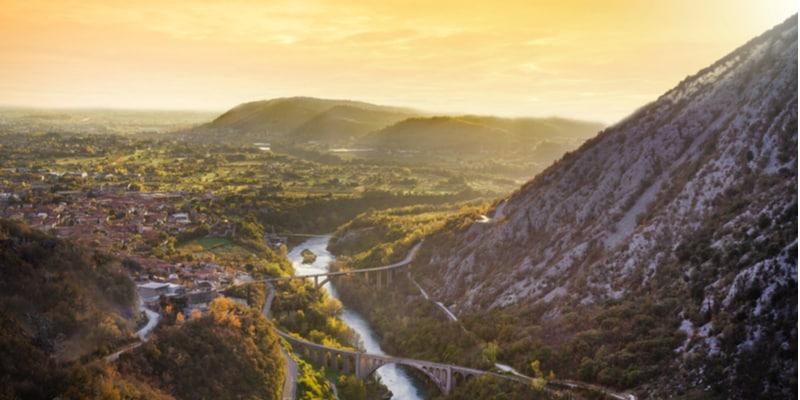 "/>
"/>
Nova Gorica is a modern university town close to the Italian border where the Mestni Park, Kostanjevica Monastery, Kromberk Castle and Solkan Bridge are worth a visit. The city today attracts tourists and many Italians to play in its casinos. But the Nova Gorica region is also known as a wine-growing area and gastronomic destination at the crossroads of two neighbouring countries and cultures. About half an hour from Nova Gorica lies the Vipava Valley, renowned for its quality wines. This beautiful green valley is traversed by the Vipava River, the only river in Europe with a delta-like mouth. The river also flows through the town of Vipava, which, due to its many karst springs, bridges and canals, is called the Venice of Slovenia. Between Nova Gorica and the Vipava Valley, there is also the beautiful medieval village of Vipavski Križ, the village of Otilica and Otliško okno, the window of Otilica, a rocky hole through which you can admire the beautiful view of the Vipava Valley.
The Logarska dolina valley 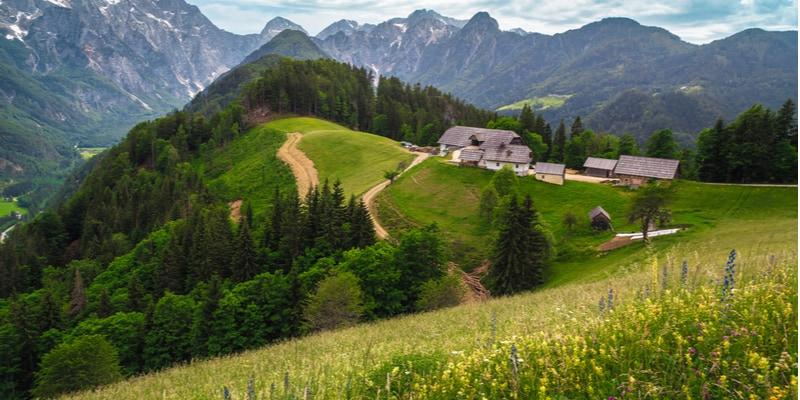 "/>
"/>
The Logarska dolina valley is a glacial valley located north of Slovenia along the Austrian border. It is a wonderful green valley ideal for hiking in nature. You can explore it by hiking, cycling or horseback riding. You can also hunt for animals to photograph or take the children to the fairytale forest. In winter, on the other hand, the valley is populated by lovers of cross-country and alpine skiing, as well as climbing or simply tobogganing.
Slovenia
Slovenia in autumn - what you must see and do
Immerse yourself in the nature of the Logarska dolina valley via the scientific and ethnographic trail Pot po Logarski, which takes you through wonderful corners of the environmental park. Here you will discover rare and endangered plant species. The valley is also famous for its numerous waterfalls, the most famous of which is the 90-metre-high Rinka.
The Logarska dolina valley is one of the three Solčavsko valleys. If you love nature, discover the other two: Robanov kot and Matkov kot. Most of the inhabitants of Solčavsko live in high-altitude farms, of which the highest in Slovenia is Bukovnik, at 1327 metres. So climb up to the alpine huts where you can have lunch in the sun and taste the gastronomic specialities of Solčavsko such as sirnica soup made from sirnek cottage cheese, sheep meat, game, pear ravioli, buckwheat polenta, homemade cheeses and homemade bread. If you want to admire the valley from above, launch yourself into the air with a paraglider.
Radovljica 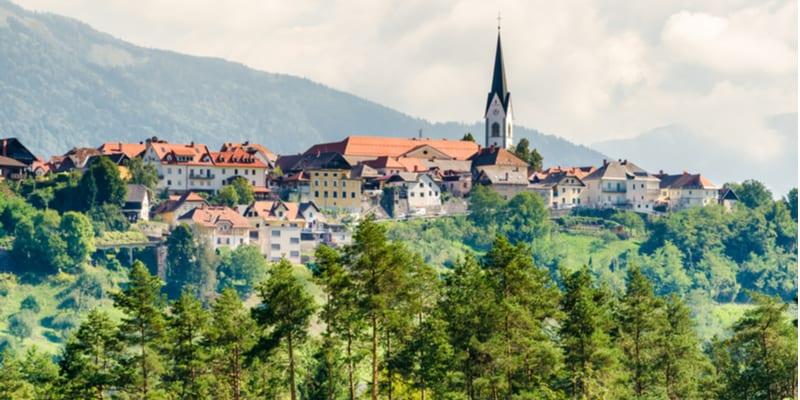 "/>
"/>
Radovljica is a medieval town with a view of the Karavanke mountain range and the Julian Alps. Known as the Sweet Radol'ca, it is a small town with a slow pace where you can relax and enjoy the pleasures of life. Radovljica is also the capital of chocolate and beekeeping, an ancient tradition. You can, in fact, visit the Beekeeping Museum or taste the honey that enriches many desserts such as honey cake, a sweet of Jewish origin, in cafes and restaurants.
Predjama Castle 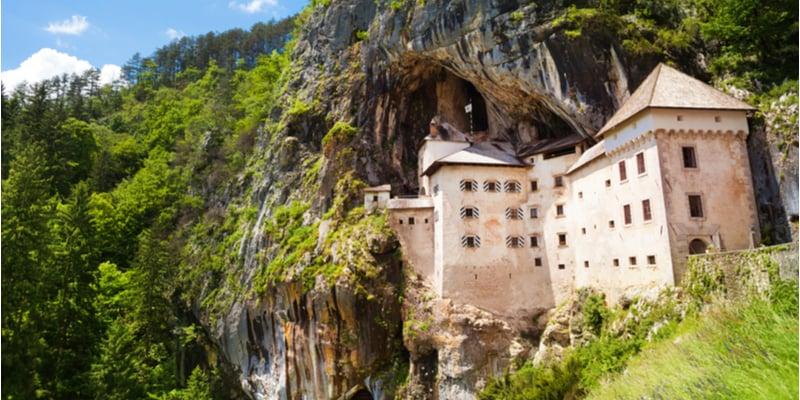 "/>
"/>
Nestled in a 123-metre high rock face for 800 years is Predjama Castle, one of the most fascinating castles in the world that seems to have come straight out of a Gothic fairy tale. The castle is a medieval marvel where the creativity of nature is incredibly intertwined with the work of man. It is a unique castle, chosen several times as a film set, such as for the TV series The Game of Thrones. A castle so romantic that it often also hosts wedding receptions. Ancient legends tell that the rebel knight Erasmus of Predjama managed to resist the siege of the imperial army for more than a year thanks to the castle's extraordinary appearance and location. Beneath the castle lie the Postojna caves, connected by underground tunnels and secret hiding places. To visit the two attractions, visitors have a shuttle bus shuttling between the caves and the castle.
The paradise of Bled: the lake, the island and the castle 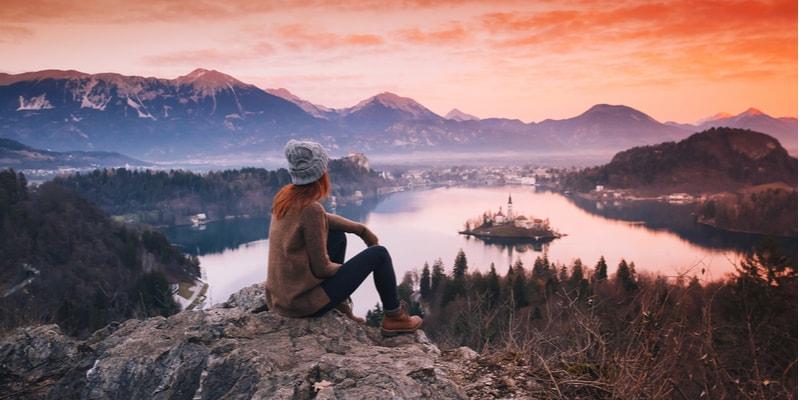 "/>
"/>
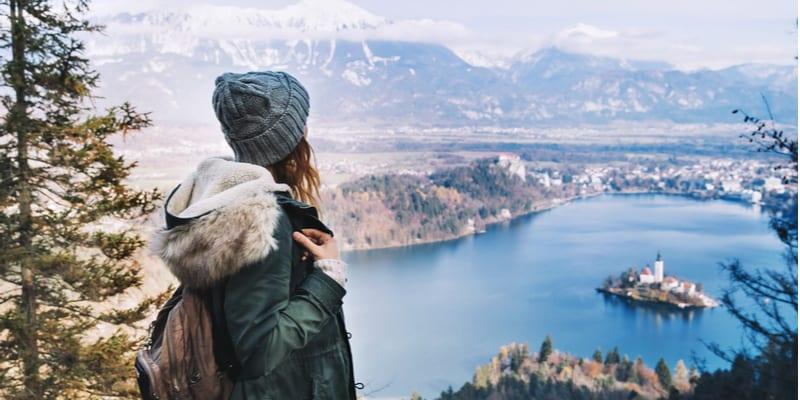
Lake Bled resembles the lakes of fairy tales. It is located in the north, near the Triglav National Park, and is a small but very scenic Alpine lake. Lake Bled is one of the most picturesque places in Slovenia, to be explored by walking along paths and huts in the greenery or by taking a ride in the carriages of the fijakerji, the typical Bled coachmen. Close to the shores of the lake is the enchanting village of Bled.
In the middle of the lake lies Slovenia's only island, which for centuries has been a popular resort that enchants with its natural beauty, ancient stories and beneficial powers. Among the many legends about the island, it is said that if you ring and listen to the church bell, your wishes will come true. You can reach the island of Bled in traditional wooden boats, the Bled pletne, which boatmen have been rowing while standing up for centuries. Once landed on the island of Bled, 99 stone steps lead you to the Church of the Assumption of Mary.
Reflected in the crystal-clear mirror of water that is Lake Bled is Bled Castle, the oldest castle in Slovenia. This magnificent 12th-century castle enchants with its picturesque architecture and beautiful interior with frescoes and works of art. Overlooking the lake, the castle is an excellent vantage point for viewing Bled, the island and the surrounding Gorenjska area with its high peaks. You can also discover traditional hand-printing techniques in the castle print shop and make your own souvenir document to take with you or fill a wine bottle and seal it with sealing wax in the castle cellars. If throughout the year the castle is often chosen as a venue for receptions, meetings and weddings, in summer it becomes the scene of costume plays and archery competitions. Don't miss an excursion to the Vintgar Gorge not far from Bled.
The most beautiful villages in Slovenia
Here is a list of the most beautiful villages in Slovenia:
Bled
A pearl on the lake of the same name near the Austrian border
Piran
A charming and colourful coastal village situated on a peninsula overlooking the Adriatic Sea
Ptuj
A picturesque village with pastel colours and Austro-Hungarian influence
Kranjska Gora
An Alpine village and gateway to Slovenia's most beautiful ski resorts, as well as a base for exploring the Triglav National Park
Kanal
A medieval village on the banks of the Soča River and on the border with Friuli Venezia Giulia
Kranj
A colourful village at the confluence of the Sava and Kobra rivers.
Skofja
Picturesque medieval village, an excellent starting point for exploring the Julian Alps
Otocec
A small town in southern Slovenia with a beautiful castle on the water, built on a small island and now converted into a luxury hotel
Novo Mesto
A Slovenian archaeological pearl situated on a bend in the Krka River and surrounded by the wine-growing hills where the characteristic cviček wine is produced, and the mysterious Gorjanci Hills. The town is the centre of Dolenjska, which boasts an archaeological heritage of world significance
Izola
An ancient fishing village that was for a long time Venetian territory, where you can stroll around the harbour full of sailboats, fishermen's houses and palaces with an Italian influence.
Slovenia's karstic caves
A trip to Slovenia is not complete without a dive into its underground world. You will find impressive caves home to a unique species, the proteus or human fish, commonly referred to as the baby dragon.
Postojna Caves
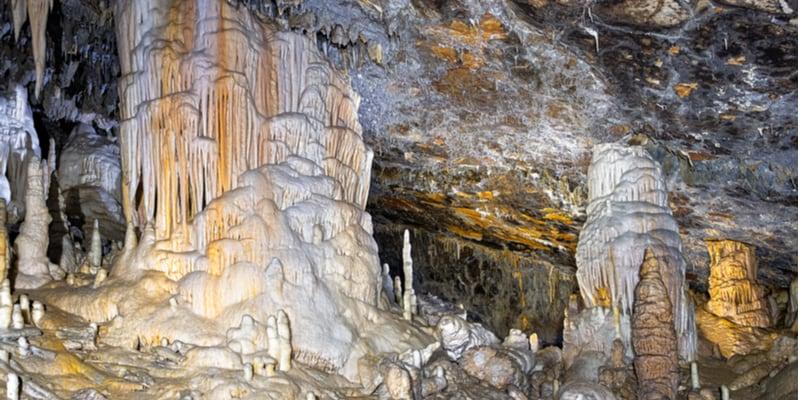
Among the most visited caves in Slovenia are the Postojna Caves. A 140-year-old train takes you through magical stalactites, unusual sculptures and underground chambers. The tour will introduce you to the most important karstic peculiarities: the largest stalagmite, called the Skyscraper, 16 metres high, and the Brillante, the symbol of the Postojna Cave, which is crystal white in colour. In addition, the Postojna Cave has a nursery that is home to 150 animal species, including the proteus, the only European vertebrate that lives in the underground world for up to a hundred years and can survive without food for up to several years. The first baby dragon was born in 2016 and was an event followed by biologists around the world. Finally, above the Postojna caves stands the fabulous Predjama Castle, which is not to be missed.
 "/>
"/>
St Kanzian Caves
The St. Kanzian Caves, a UNESCO World Heritage Site, also attract visitors from all over the world. This is the karstic cave with the largest underground canyon in Europe, an impressive 146 metres high. Along the way you will see amazing bridges, underground waterfalls, giant stalactites up to 15 metres high and other works of the underground river Timavo. Surrounding the St. Kanzien Caves is a regional park with educational and cycling trails.
Kostanjevica Caves
At the foot of the Gorjanci mountains, the lesser known but equally interesting Kostanjevica Caves are hidden. Here, rainwater, underground water flows and tectonic movements have created beautiful sediment formations of incredible shapes over millennia.
Vilenica Cave
More mysterious is the Vilenica Cave, whose exact age is still unknown. Descending into the cave, you will enter the so-called Ballroom, where the closing event of the Vilenica International Literature Prize is held each year. The variety of stalactites with wonderful colours and shapes have inspired many artists.
Cave Križna jama
Finally, the Križna jama cave is home to a system of underground lakes with turquoise waters, which you can explore by rubber dinghy under the guidance of experienced speleologists, who will lead you to majestic karst caves. You will also find the remains of the cave bear that wintered in the Križna jama cave during the Ice Age.
Seaside towns on the Slovenian coast
Piran
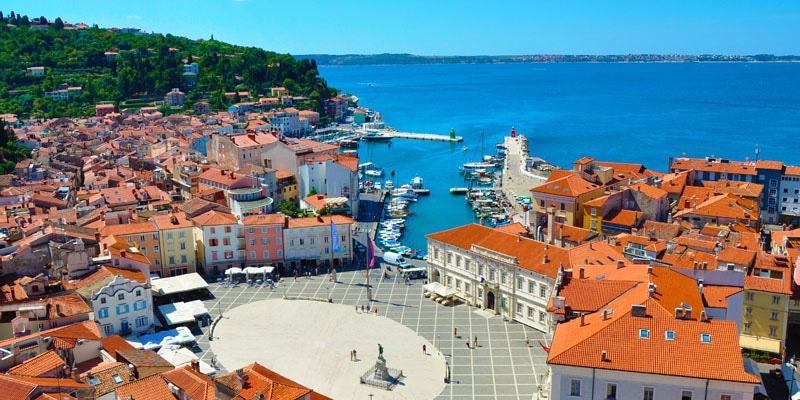
Very close to the Italian border, Piran is considered the most beautiful town on the Slovenian coast, situated on a peninsula surrounded by the Adriatic Sea. In the medieval old town, the strong Venetian influence is evident, from the architecture to the atmosphere in the town. Piran's fortunes are linked to salt, which enabled its rise in the Middle Ages and is still extracted by hand using traditional tools. Visit, therefore, the ancient salt pans, from the smaller ones in Strunjan to the larger ones in Sečovlje. Also not to be missed is the panoramic view of the town from the ancient walls or from the bell tower of St George's Church, built on a hill overlooking the old town. Furthermore, from Piran you can reach Portorož, another beautiful seaside town, on foot, by bicycle or on horseback, following the cycle paths and horseback riding trails. One of the most beautiful routes is the Parenzana, a 130-kilometre-long cycle path that runs along an abandoned railway line and connects Trieste with Poreč and Croatia, passing by the Piran salt pans. From the old town centre of Piran, descend the steps leading down to the beaches.
 "/>
"/>
Portorož
Just a few kilometres from Trieste is Portoroz, a part of the municipality of Piran where, since the mid-19th century, one of the most elegant and attractive tourist centres in the entire Adriatic region has developed. Portoroz, in Slovenian, is a town with a strong Italian influence, washed by a crystal-clear sea, rich in Art Nouveau palaces and hotels and elegant spas. Portoroz, therefore, offers numerous free or private beaches, but is also famous for its casino. Finally, salt is the fortune of this coastal town. Not far from the historical centre are the two old salt warehouses Magazen Grando and Monfort, built in 1820 on the inspiration of French architecture, now converted into interesting cultural centres. If you want to visit the salt pans, go to the Sečovlje salt pans, a beautiful natural park not far from Portorož where you can walk among the silvery landscapes where salt is extracted. Just outside the centre of Portorož, you will also see an open-air art gallery called Forma Viva and on a hillside the impressive ruins of the St. Bernardine monastery.

Slovenia
Slovenia Green Wellness Route, itinerary and route
Strunjan
Another part of Piran not to be missed is Strunjan, surrounded by unspoilt nature. Here you will see majestic cliffs overlooking the Adriatic Sea, 80 metres high, shaped by the sea and wind. Along the natural strip overlooking the Gulf of Trieste, which has become a protected nature reserve, lies the small village of Strunjan with 600 inhabitants. Don't miss the Strunjan saltpans, ideal for a romantic sunset, and the thermal baths.
Koper
Koper is Slovenia's main port, the city of hundreds of suns decorating medieval Venetian palaces. Koper is a fascinating historical city that represents the bridge between the Karst and sub-Mediterranean worlds. Don't miss the Cathedral of the Assumption, considered one of the largest churches in Slovenia, which houses a prestigious painting by the famous painter Vittore Carpaccio. The Regional Museum, on the other hand, is the largest in Slovenian Istria. Finally, admire the elegant Praetorian Palace in the centre. Koper is also known for its evening nightlife and its not particularly beautiful but comfortable beaches close to the centre. Near Koper, you can visit San Servolo Castle on the edge of the Karst ridge, from which you can admire the gulfs of Trieste and Koper and the neighbouring villages. Or you can go to Carcase, a typical Istrian village, where you can see the Carcase stone from the 1st century B.C., a testimony to pre-Christian religions.
Slovenia in winter
It is during the winter season that Slovenia reaches the peak of its beauty, turning into a true wonderland. Its winter landscapes, fewer tourists and opportunities for sporting activities in contact with snowy nature provide a long list of unique impressions. What to see? Here are the best things not to miss
Ljubljana
Piran
St. Kanzian Caves
Lake Bled
Triglav National Park
Idrija Mercury Mine
Sečovlje Salt Pans Nature Park
Lake Bohinj
Postojna Cave
Igloo Villages
Mount Triglav
Mlačca Gorge
Dobrna Thermal Spa
 "/>
"/>
Beaches, rivers and lakes
Slovenia has only 42 kilometres of coastline, sandwiched between Italy and Croatia, but it offers beautiful and often underrated beaches for everyone.
If you want to be at the centre of events, head to the central beach in Portorož, Slovenia's largest, best-equipped beach, full of clubs and restaurants. Near Piran is Simonov zaliv, a beach with an archaeological park nearby. In Koper, one can swim at the town bathing establishment or at Giusterna. Close to the Italian border is Ankaran with natural bathing sites arranged at the Adria campsite and at Punta grossa.
For a sports or family holiday, Isola is the best destination for surfing and kitesurfing at Punta Ronco or admiring the view at Punta Gallo, Isola's most iconic beach.
If, on the other hand, you prefer quiet and unspoilt beaches, head to Moon Bay, located in the Strunjan Nature Park, a strip of land behind high cliffs that can be reached by descending a steep path. Next to it is Mesečev Zaliv, a bay of small pebbles that can only be reached on foot from Strunjan.
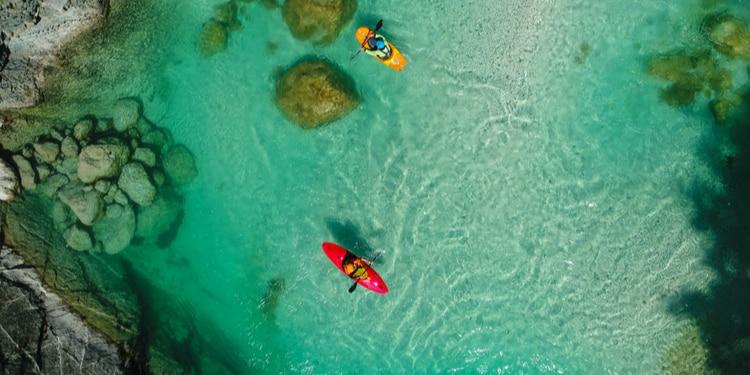
If, instead of beaches, you prefer the lake, Bled and Bohinj are Slovenia's favourite summer swimming lakes. For a day on the river, on the other hand, the most suitable for bathing is the Kolpa, the warmest river in Slovenia, where you can relax at the bathing establishment in Podzemelj.
 "/>
"/>
What to see in Slovenia in 7 days
If you want to visit Slovenia in a week, we recommend starting in Ljubljana, where you can admire the minimalist architecture of master architect Jože Plečnik and Ljubljana Castle. Lake Bled with its island and castle is a wonder not to be missed. Among the castles, if you have to choose just one, visit the mysterious Predjama Castle. Slovenia is also famous for its caves, among which the caves of St. Kanzian or Postojna, where dragon cubs live, are worth a visit. To get an idea of the green country, immerse yourself in nature in the Logarska Dolina valley, where you can go on all kinds of hikes. If, on the other hand, it is summer and you want to relax on the Slovenian coast, explore the beaches around Portorož, Piran, Koper and Izola or dive into pristine beaches such as Moon Bay.
Itineraries in Slovenia
First time in Slovenia
Those visiting Slovenia for the first time will want to see the best of the country, from the capital to the coast, via the Karst region and the mountains. So start in Ljubljana, the green capital, and then head to the lakes, Bled, just a 40-minute drive from the capital, or Bohinj a little further away. If you want to discover the heart of the green country, go to Logarska Dolina, which is less than two hours from Lake Bled. Heading south, head to the Postojna caves where you can also visit Predjama Castle. Alternatively, half an hour from Postojna you will find the caves of San Canziano. Finally, head towards the coast to relax in seaside resorts such as Piran, Portorož, Izola or Koper and their beaches.
Itinerary in the Green Country
If you want to discover the best of the Green Country, leave Ljubljana for Lake Bled where you can walk along the paths around the lake, or Lake Bohinj where you can kayak through its cold waters. A few kilometres from the lakes you will find the Triglav National Park where you will see one of the most beautiful waterfalls in Slovenia, Slap Savica. It is a 60-metre high waterfall in the middle of the forest. In the Triglav National Park, don't miss the Tolmin gorges, very deep gorges crossed by the clear waters of the Tolminka river, or the Vintgar gorge where you can walk on a system of wooden footbridges that follow the path of the Radovna river between high vertical rock walls to the Sum waterfall. Find out about all the activities and excursions possible in the park. Trekking enthusiasts can head to the source of the Soča River (Soca in Slovenian): a rather challenging route will lead you to the spring cave, a sort of small natural pool with turquoise water. Finally, if you want to gain altitude, head north to Kranjska Gora, a town located between the Julian Alps and the Karavanke Mountains, a well-known ski resort where you can go trekking in summer. Kranjska Gora is also the starting point for a closer look at the Martuljek mountains and for reaching the summit of the Vrsic Pass, which is about 1600 metres high. A guide to trekking in the Julian Alps in Slovenia can be found at this link.
Romantic Slovenia between castles, villages and caves
If you are fascinated by the romantic side of Slovenia steeped in ancient stories and legends, set off on a tour of castles, medieval villages and mysterious caves. Start at Ljubljana Castle and head north to Lake Bled, where you can visit Bled Castle and the little village of the same name along the shores of the lake. Heading south, head to the charming Predjama Castle where you can also visit the Postojna caves. Heading east, however, you'll reach Otocec Castle, built on a small island in the Krka River, five minutes from Novo Mesto. This enchanting castle on the water, dating back to the 13th century, has now been converted into a luxury hotel. On the way back to Ljubljana you will then encounter the exquisite Bogensperk Castle, owned by Janez von Valvasor, a member of the Royal Society of London, in the late 17th century.
When to go to Slovenia
The best time to travel around Slovenia is spring or summer. If you want to plan a beach holiday, however, it is clearly preferable to go during the summer months.
 "/>
"/>
Map and map
Slovenia