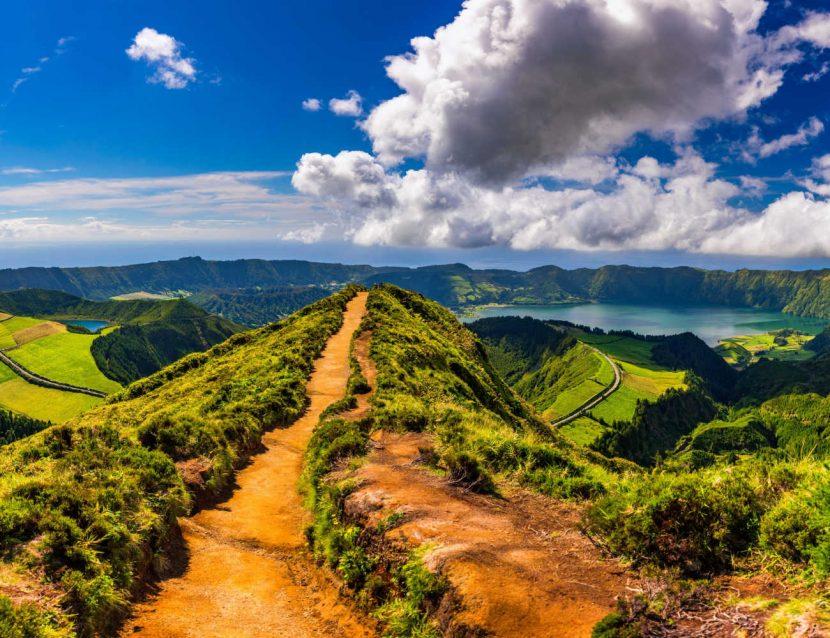
The Adriatic coast stretches 1470 kilometres from Trieste to Santa Maria di Leuca, finis terrae where the Adriatic Sea meets the Ionian Sea.
It is a sandy coastline in the first part, which then opens up to beautiful rocky landscapes in the Conero and Gargano areas, before becoming sandy again in the last part of the coastline, that of Apulia and Salento.
TravellingItaly from north to south along the Adriatic side, one encounters charming villages on the border with Slovenia, lagoon centres with a Venetian atmosphere, villages at the mouth of the Po, perched on the cliffs of the Riviera del Conero or hidden along the Trabocchi coast, and finally fishing villages blinded by the southern sun. Discover the 10 lesser-known villages along the Adriatic coast.
10 villages on the Italian Adriatic Coast
Muggia
Grado
Chioggia
Comacchio
Grottammare
Numana
Ortona
San Vito Chietino
Rodi Garganico
Peschici
 "/>
"/>
Lesser-known Adriatic Coast Villages
Muggia - Friuli Venezia Giulia
On the last strip of Italy on the border with Slovenia lies Muggia, a picturesque village in Friuli Venezia Giulia. Landing in the small dock, it almost seems as if you are entering the narrow streets and small squares. Going up to the castle, one can admire the magnificent panorama of the Gulf of Trieste. The Venetian atmosphere emerges from the architecture but also from the dialect, customs and gastronomic traditions that tell of a past shared with the Serenissima. Arriving from the sea, the white Istrian stones and colourful houses of Muggia blend with the verdant Karst environment. It is framed by seven kilometres of coastline and a crown of hills that panoramically dominate a vast area, both Italian and Istrian.
Grado - Friuli Venezia Giulia
Founded as a maritime port of call for Aquileia, Grado was part of a complex port system involving the islands of the lagoon of the same name. It is an important tourist centre, also known as the Island of the Sun and, due to its particular history, the First Venice.
Grado was also the favourite holiday destination of the Habsburg aristocracy for its renowned Marine Spa, which is still accessible today. The ancient heart of Grado, historically concentrated within the walls and around the Basilica of Sant'Eufemia, developed beyond Piazza XXVI Maggio. Stroll along its delightful alleyways that take you past ancient fishermen's dwellings, made up of balaor (balconies) and fugher (chimneys) ending with fanciful chimney pots. Grado will amaze you with its picturesque historic centre of Venetian origin, enriched by Roman and early Christian archaeological remains. Then explore the lagoon full of islands with its casoni, typical fishermen's dwellings with reed roofs. Or relax on the sandy beaches of Grado, for years a Blue Flag.
Chioggia - Veneto
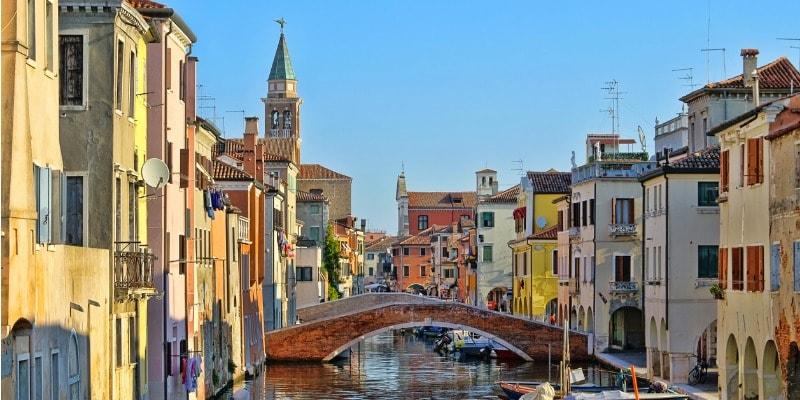
For its quiet calli and picturesque canals, it is called Little Venice. Of Roman origins, this Venetian strip became populated with the influx of inhabitants from the Veneto hinterland who fled the barbarian invasions. From Venice, it is worth visiting Chioggia and strolling among the colourful houses and canals of San Domenico, Vena and Lombardo. The Corso del Popolo is a riot of grand architecture and precious relics: the Palazzo Comunale, the Granaio, the 13th-century San Nicolò, San Domenico and its Carpaccio, the Baroque S. Andrea and Piazzetta Vigo with its 12th-century column topped by El gato (a lion of St Mark). Don't miss the Torre dell'Orologio (Clock Tower), a former lighthouse and watchtower, now a museum tracing the history of Chioggia, on top of which you can visit the astrological clock and belfry. Visit the Duomo, dedicated to Santa Maria Assunta in cielo, and the nearby church of S. Martino, which once housed a polyptych attributed to Paolo Veneziano, now on display in the nearby Museo Diocesano. It is interesting to take a tour of the pescheria, the characteristic fish market that runs from Tuesday to Sunday and is supplied directly by fishermen returning early in the morning from the sea.
In the port of Chioggia you can still admire the 'bragozzi', typical brightly coloured boats, moored at the quay. Pay attention to the skilled embroiderers of lace, an ancient local tradition.
 "/>
"/>
Comacchio - Emilia-Romagna
Called the 'little Venice', Comacchio is an enchanting village that lies in the middle of the lagoon of the same name between the Po di Volano and the Po di Comacchio. Situated on the northern coast of Emilia-Romagna, this small town in the province of Ferrara enchants with its natural beauty and historical vestiges. In ancient times it was built by joining, with bridges, 13 small islands formed at the mouth of the Po di Primario with the sea. Over the centuries it was an important naval port of call in the Adriatic Sea and one of the fundamental ports for trade in Emilia-Romagna. Of its glorious past, the town today preserves architecture and buildings of great value, as well as characteristic canals that evoke the Venetian atmosphere. Comacchio is also located within the Po Delta Park, so explore this magnificent nature reserve suspended between land and water.
Grottammare alta - Marche
Grottammare alta is a delightful medieval village overlooking the sea, perched on the edge of a hill, with rustic houses and small streets, intoxicated by the scent of orange groves. Along the way there is the 17th-century villa of Cardinal Decio Azzolino, where Christine of Sweden stayed. Following the expulsion of the city in 1525 by the pirate Dulcigno, the village was fortified with walls, gates and a Torrione known as Torrione della battaglia. It currently houses many of the works of the native wind sculptor, one of the greatest artists of the 20th century, Pericle Fazzini. The 16th-century Church of Sant'Agostino houses a Madonna of Mercy by Vincenzo Pagani. In the nearby Piazzetta Peretti, there is an exceptional view from the balconied portico of the building housing the historic Teatro dell'Arancio, near which stands the Clock Tower.
The Church of Santa Lucia, built by Camilla Peretti in memory of her brother Felice Peretti, who became Pope Sixtus V, is worth a visit. On the hill overlooking the village are the remains of a fortress built in the 9th-10th centuries.
Numana - Marche
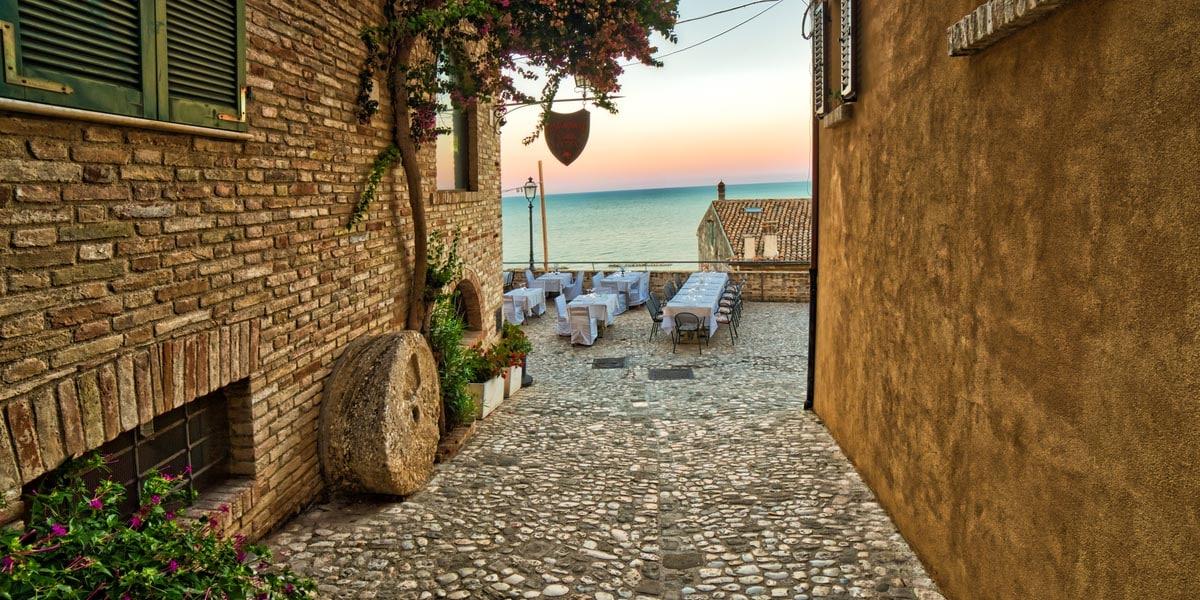
An ancient fishing village that enchants with its narrow streets and colourful houses overlooking the Conero Riviera. Numana is located in the province of Ancona and is a true jewel of the coast. Its picturesque centre is enclosed in the upper part of the town known as Numana Alta, while the lower part of Numana is the livelier part with its bathing establishments, magnificent beaches and limpid waters, which have been awarded the Blue Flag for years. Numana retains its maritime origins in the upper part, where a dense network of narrow streets embraces the colourful fishermen's houses and then opens out into a wide belvedere overlooking the sea. A terrace with a unique panorama that sweeps over the entire Conero Riviera coastline. From the centre, one descends towards the port along the ancient stepped street, the Costarella, which the fishermen walked every morning at dawn. Then, in just a few minutes from the centre, you can reach the Spiaggia dei Frati (Friars' Beach); from the port of Numana, on the other hand, boats leave for the famous Spiaggia delle Due Sorelle (Two Sisters' Beach).
Ortona - Abruzzo
On a promontory overlooking the Adriatic Sea lies the ancient city of Ortona. A Roman city, Ortona was later occupied by the Goths, the Byzantines, the Lombards and finally the Normans who burnt it down in the 11th century. Resurrected during the Swabian period, the city was then largely destroyed during World War II. Described by Churchill as the 'Stalingrad of Italy', during the conflict Ortona was the backdrop to numerous bombings and tough battles between the Germans and the Allies.
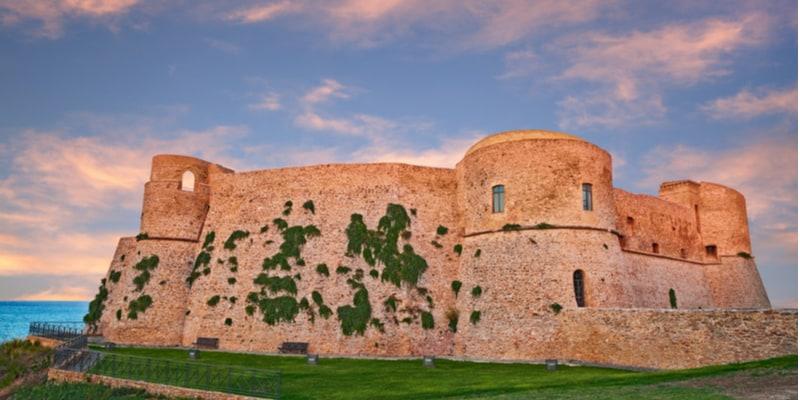
Today, Ortona is one of the most beautiful seaside resorts on the Costa dei Trabocchi, the Adriatic coastline that also inspired Gabriele D'Annunzio. The town in the province of Chieti is also located in an area rich in vineyards that have earned it the nickname of wine city. Explore Ortona's historical centre, the picturesque Passeggiata Orientale, where the Palazzo Farnese is located, and the golden beaches of the Costa dei Trabocchi. Don't miss the Aragonese Castle, perched atop a sheer spur above the sea, built between 1448 and 1452 at the behest of Ferdinand of Aragon to defend the port.
 "/>
"/>
San Vito Chietino - Abruzzo
San Vito Chietino overlooks the Adriatic Sea along the Costa dei Trabocchi, between Ortona and Fossacesia. The village stands on a rocky outcrop and from its balconies you can enjoy a wide panorama stretching from Majella to Gargano to the Tremiti Islands. "The country of brooms", D'Annunzio called it, who stayed here, together with his lover Barbara Leoni, in the summer of 1889 in the eremo delle Portelle or D'Annunzio's hermitage. In this residence, the Pescara poet found inspiration and setting for the Triumph of Death, the last of the so-called Romanzi della Rosa trilogy. The village still tells of its medieval past through the remains of its defensive walls and its beautiful churches. Beaches of sand or pebbles, dominated by majestic sandstone cliffs, then show the best of the Trabocchi coastline. The particularly indented coastline is characterised by the Turchino Promontory, so called because of the very clear sea that takes on the intense hues of the sky. This corner is made even more evocative by the presence of the Trabocco del Turchino.
Rodi Garganico - Apulia
Described by many as the 'garden of the Gargano', Rodi Garganico is a seaside village with a historic centre composed of whitewashed houses and beautiful beaches. This ancient fishing village, surrounded by citrus and olive groves, stands on a promontory overlooking the sea, dividing its long coastline into Levante beach and Ponente beach.
Located in the province of Foggia, Rodi Garganico today is an important seaside resort in the Gargano National Park. In the historical centre, visit the sanctuary of the Madonna della Libera, where the Sacred Stone on which the Byzantine icon brought to safety by the Venetians rested when Constantinople was invaded by the Turks. From the marina, also named after the Madonna SS. Della Libera, it is easy to reach the Tremiti islands.
Peschici, Apulia
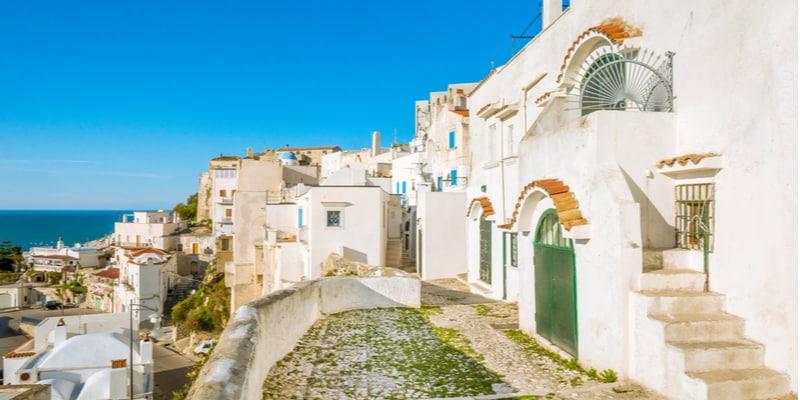
Like many villages in Italy, Peschici stands on a cliff, but if you look down you will lose yourself in the blue Adriatic Sea. This beautiful village in the province of Foggia is part of the Gargano National Park and is an ideal destination for those seeking a seaside escape at any time of year. A white town standing out against the blue sea, characterised by an intricate network of alleys, steps, arches and courtyards. Angevins, Aragonese, Spanish, Habsburgs and Bourbons have alternated in the course of history in the domination of what is now one of the most picturesque villages on the Adriatic Riviera. Stroll by the sea along the fine sandy beaches or go to the harbour and embark for the Tremiti Islands. If you then walk along the coastal stretch from Peschici towards Vieste, you can admire the ancient watchtowers and the famous trabucchi.
 "/>
"/>
Italy