Climbing glaciers in Iceland or diving into the crystal-clear waters of Lampedusa, seeing the Northern Lights in Norway or witnessing the spectacle of Paris whitewashed by snow, getting lost in the Alhambra in Granada, walking in the blue forest of Hallerbos in Belgium or along the impressive Cliffs of Moher in Ireland.
These are magical moments, breathtaking spectacles, unforgettable experiences not to be missed in Europe. Among the many, we have selected a few for you.
Here are 20 things to do in Europe at least once in a lifetime.
20 Things To Do In Europe At Least Once In A Lifetime
Walk the Cliffs of Moher in Ireland
Walk the Path of the Gods in Campania
Walk the Transfagarasan Road in Romania
Seeing the Northern Lights on the Lofoten Islands in Norway
Exploring the Snæfellsnes volcano and glacier in Iceland
Seeing Mont Saint-Michel in France
Strolling through the Hallerbos blue forest in Belgium
Strolling through tulip fields in Holland
Getting lost in the Alhambra in Granada
Watching the sunset on Santorini in Greece
Visiting Predjama Castle in Slovenia
Attending the Venice Carnival
Driving from the Algarve to Porto along the Atlantic coast in Portugal
Tasting Sachertorte in Vienna in Austria
Visiting Paris in the snow
Partying in Ibiza
Travelling on the Bernina Red Train, Italy-Switzerland
Skiing in the Dolomites in Italy
Swimming in the crystal clear waters of the Rabbit Beach in Lampedusa
Pilgrim's Way to Santiago
 "/>
"/>
Walking the Cliffs of Moher in Ireland
 "/>
"/>
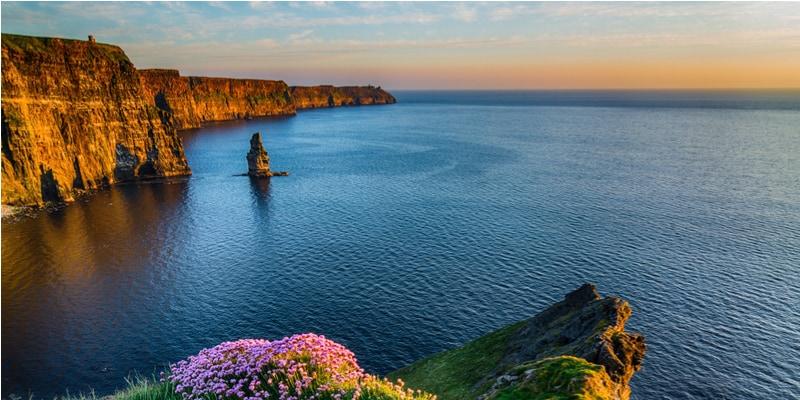
The Cliffs of Moher will send shivers down your spine at the dizzying height of the sheer cliffs overlooking the ocean and the breathtaking beauty of the view from the top. The Cliffs of Moher are one of Ireland's most impressive sights.
They are impressive 8-kilometre-long cliffs, up to 214 metres high, plunging into the Atlantic Ocean. Walking on these cliffs plunging into the blue, between the wind and the waves crashing on the rocks is a unique sensation, an unforgettable experience that will make you feel at the edge of the world.
The view then becomes truly magical at sunset, when the peace is only interrupted by the flight of birds. The Cliffs of Moher are so scenic that they have been chosen as locations for films including Harry Potter and the Half-Blood Prince, The Princess Bride and Ryan's Daughter. Located in the north-west of the Clare coast in the west of Ireland, the cliffs are freely accessible.
Walk the Path of the Gods in Campania
 "/>
"/>
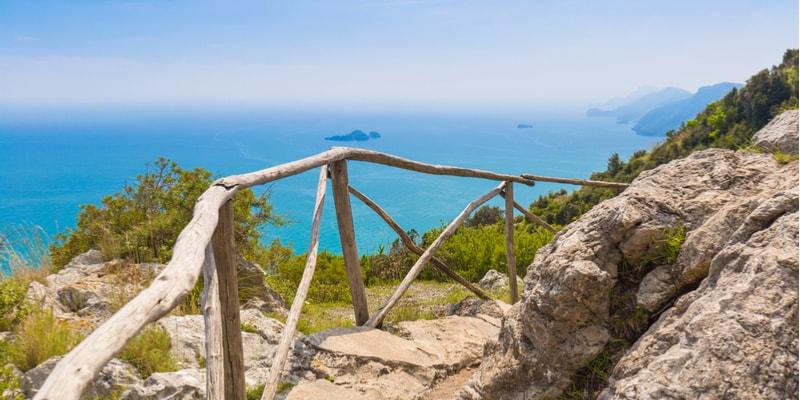
It is the path of paths. The Sentiero degli Dei (Path of the Gods) is the most beautiful panoramic sea-view path on the Amalfi Coast and one of the most beautiful in Italy. The Path of the Gods starts from the church of San Matteo in Bomerano, a hamlet of Agerola 650 metres above sea level, then crosses Nocelle and continues along the ancient route of Hellenic settlers once dominated by temples. Finally, it descends to Positano via 1500 steps.
The path, which we recommend tackling from top to bottom, is marked with white and red signs numbered 02. It is an 8 km tourist trail and of slight difficulty, but is not recommended for those suffering from vertigo. The walking time is about four and a half hours. During the walk through the Mediterranean maquis, you will be able to enjoy the splendid views of the coastline and the sea as far as the eye can see. The path still retains all its charm that has inspired numerous writers and poets over time. Among them, Italo Calvino described the Sentiero degli Dei as 'that road suspended over the magical gulf of the Sirens still ploughed by memory and myth'.
Travelling the Transfagarasan Road in Romania
 "/>
"/>
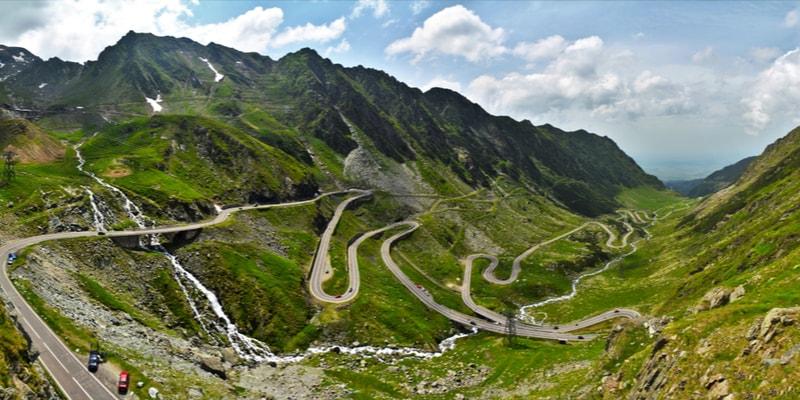
Considered among the most beautiful in Europe, the Transfagarasan is a road with breathtaking views that crosses the Fagarasan mountain range in Transylvania. Built between 1970 and 1974 at the behest of dictator Nicolae Ceauşescu to allow Romanian troops to cross the Carpathians quickly in the event of a Soviet invasion, the road connects the regions of Transylvania and Muntenia and is still called Ceauşescu's folly.
The 152-kilometre-long road starts in the town of Bascov, near Pitesti, passes through Curtea de Arges and winds its way through Romania's highest mountains, offering breathtaking views. To the north, the landscape is arid, while to the south, green valleys follow one another. It passes through nature reserves until it reaches the glacial lake Balea and ends near the town of Cartisoara. There are many tunnels and viaducts on this winding road. The Transfagarasan is only open four months of the year, the summer months, due to weather conditions. An epic driving experience that takes about two to three days to complete.
Seeing the Northern Lights on the Lofoten Islands in Norway
 "/>
"/>
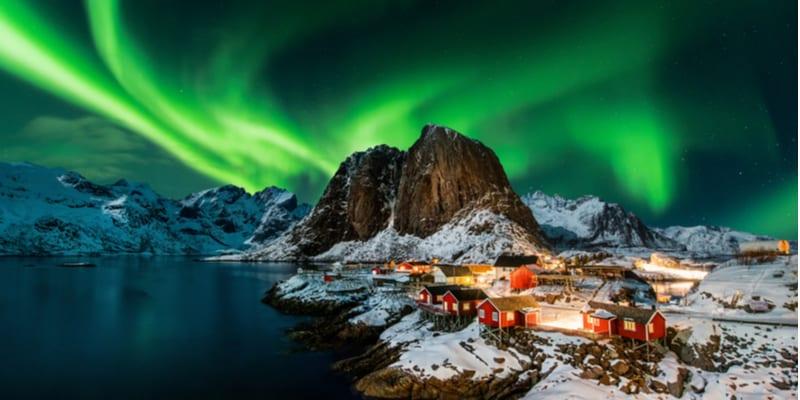
Green, blue, pink and violet lights dance in the night sky creating an awe-inspiring ballet that has something magical about it. The aurora borealis is a night-time celestial spectacle clearly visible from northern Norway. It is best viewed from the Lofoten Islands, a fairytale landscape of water, land and light where the nights shimmer. The Lofoten Islands are an archipelago in Norway, stretching northwest between the counties of Nordland and Troms. They lie about 200 km above the Arctic Circle, but have a much more temperate climate than many other places at the same latitude, thanks to the influence of the Gulf Stream.
The Lofoten Islands captivate with their strikingly beautiful landscape: breathtaking fjords, majestic mountains and sheer cliffs between which hide fishing villages dating back to the Viking era. The main islands are Austvågøy, Gimsøy, Flakstadøy, Varøy, Vestvågøy, Moskensøy and Røst. They are separated from the mainland by Vestfjorden, but are all connected by bridges and scenic roads. You can move from island to island by kayak to slowly admire this Nordic paradise in the Norwegian Sea from the water.
But also go fishing for Nordic cod, skiing, hiking, rafting, surfing or diving. Because nature is king here. The Norwegian poet, writer and playwright, Bjørnstjerne Bjørnsons, was right when he said: 'You cannot say you have seen nature in its authenticity if you have not been to Norway first, and the most beautiful place is the Lofoten Islands'.
Exploring the Snæfellsnes volcano and glacier in Iceland
 "/>
"/>
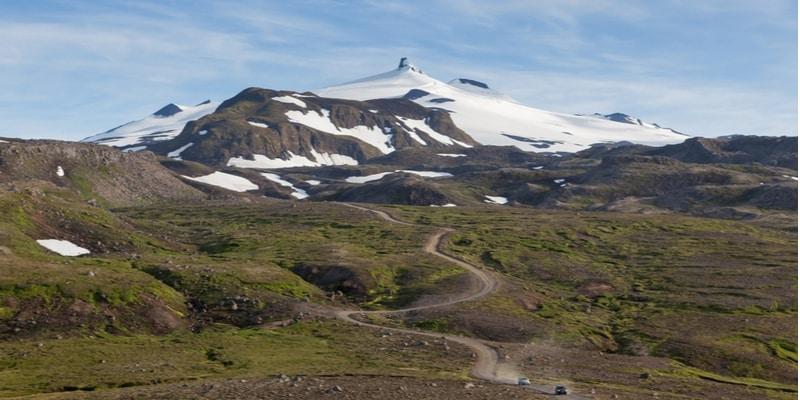
Immerse yourself in the absolute peace of Arctic nature between lush fjords, volcanic peaks, spectacular cliffs, wide golden beaches and black lava fields. The fascinating Snæfellsnes peninsula is nicknamed 'Iceland in miniature' for the varied landscapes it encompasses. If you have to choose one, however, go to Snæfellsjökull.
This is a two-peaked glacier covering a volcano at the tip of the peninsula, surrounded by irregular lava fields and a scenic coastline on three sides. It can be seen from some of the area's other prominent sites, such as the almost abandoned village of Búdir and the stacks of Lóndrangar. If the sky is clear, Snæfellsjökull can be seen from Reykjavík by looking across Faxaflói Bay, but it is clearly not the same as going there. Declared a national park in 2001, the Snæfellsnes peninsula is a popular place for Icelanders and artists alike. The glacier in particular has inspired numerous works, especially literary ones, including Jules Verne's Journey to the Centre of the Earth.
See Mont Saint-Michel in France
 "/>
"/>
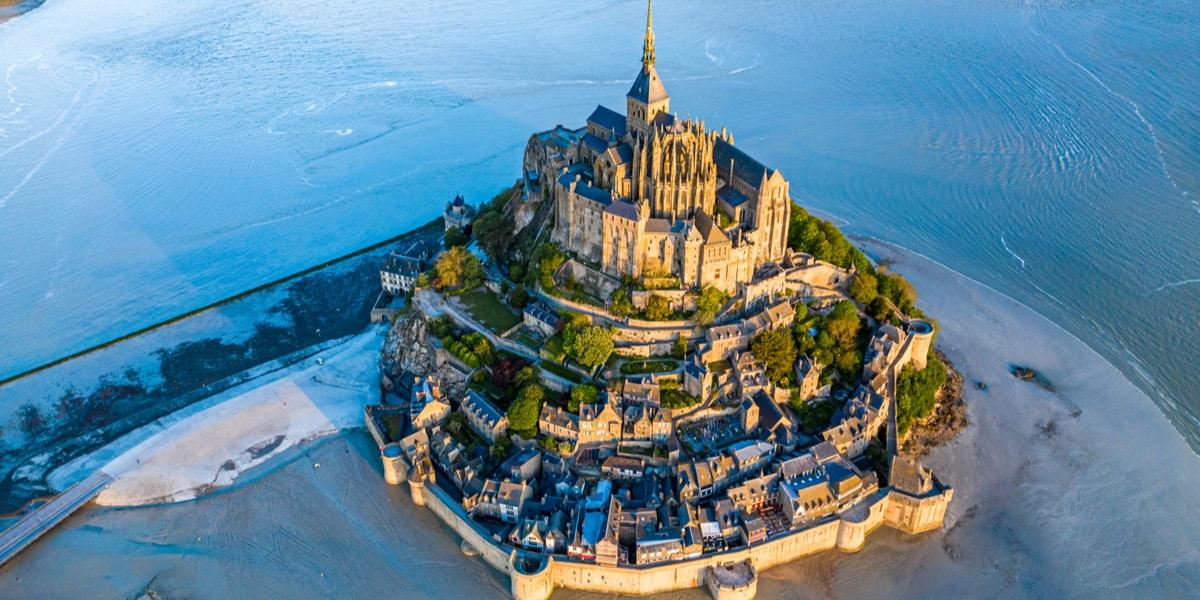
An abbey on a mountain or an island, a staging of nature that changes with the tides, the winds, the light. Mont Saint-Michel, a Unesco heritage site, is one of the most visited tourist sites in France. "Mont Saint-Michel is to France what the Great Pyramid is to Egypt," said Victor Hugo.
Between Normandy and Brittany, this magical place is the scene of the largest tides in Europe. On high tide days, the mountain becomes an island for a few hours. At the top of the mountain, the Benedictine abbey or the terrace to the west are the ideal vantage point from which to admire the spectacle. The abbey, which dates back to 709 A.D., also served as the inspiration for the Disney film, Rapunzel, confirming the dreamlike atmosphere of Mont Saint-Michel.
Walking in the blue forest of Hallerbos in Belgium
 "/>
"/>
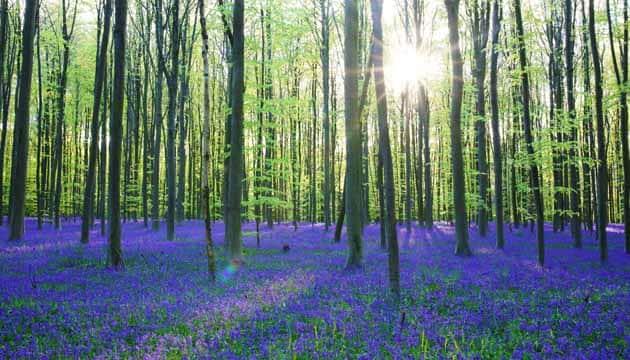
On the outskirts of Brussels lies an enchanted forest of blue hyacinths. Known by the Flemish name of Hallerbos, this 555-hectare forest stretches along the border between Flanders and Wallonia. In spring, daffodils, anemones and buttercups dye it a thousand different colours, but it is the woodland hyacinths, which bloom at the end of April, that form a carpet of indigo-blue bells. An enchantment not to be missed.
Strolling through tulip fields in Holland
 "/>
"/>
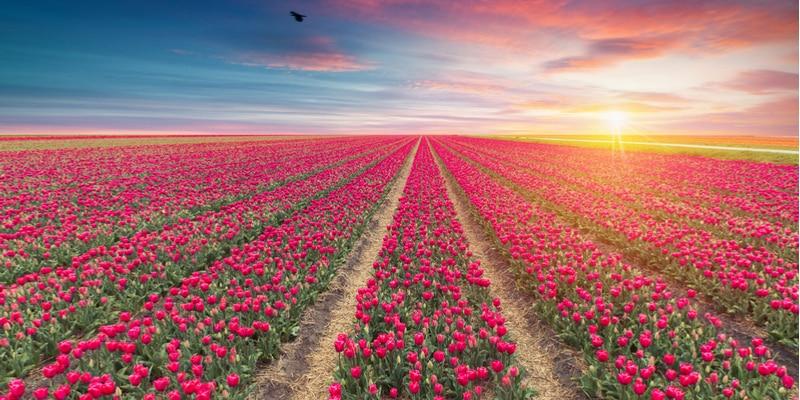
It is the picture of spring. From mid-March to mid-May, part of Holland turns into a huge carpet of tulips. Most of the tulip farms are located in the north-western polders in the province of Flevoland.
But flowering fields can also be found along the coast of The Hague and around Leiden to Alkmaar in the northern region. Then the famous Keukenhof gardens, 30 minutes from Amsterdam, offer the largest flower exhibition in the world. Also half an hour away from Amsterdam is the famous flower auction, FloraHolland, in Aalsmeer. Strolling among expanses of colourful tulips is a joy for the eyes and heart.
Getting lost in the Alhambra in Granada
 "/>
"/>
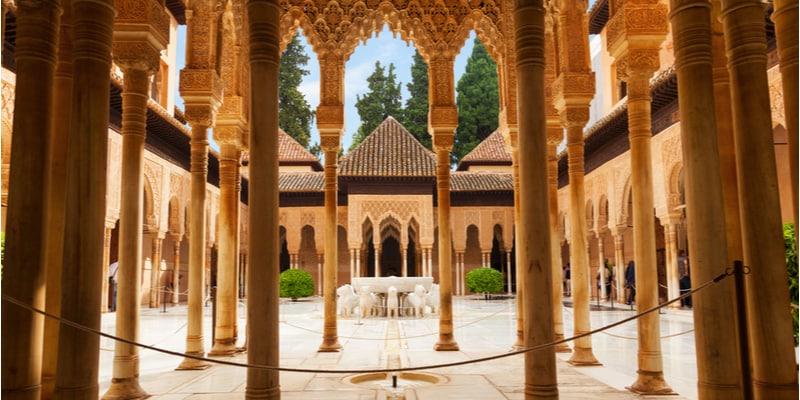
A trip to the citadel of One Thousand and One Nights. The Alhambra is the fabulous fortress in Granada, Spain, that should be visited at least once in a lifetime.
It is a sumptuous palace built between the 9th and 14th centuries and enshrined as the last stronghold of the Moors in Western Europe. I
he name Alhambra means 'the red one' in Arabic: red are indeed the outer walls of this Spanish fortress. But it is the interior of the Alhambra that amazes the visitor, who finds himself bewildered by the magic of the place: patios, towers and halls shimmer amidst marble, stucco and zelliges. You will see splendid mosaics, water mirrors, fountains and sumptuous rooms smelling of citrus fruits. You will lose yourself in the lush Generalife, the opulent summer estate of the sultans. Best of all, you will enjoy spectacular views over the rooftops of Granada to the mountains in the distance. A finalist candidate to be named among the seven wonders of the world, the Alhambra bewitches with its Andalusian charm.
Watching the sunset at Santorini in Greece
 "/>
"/>
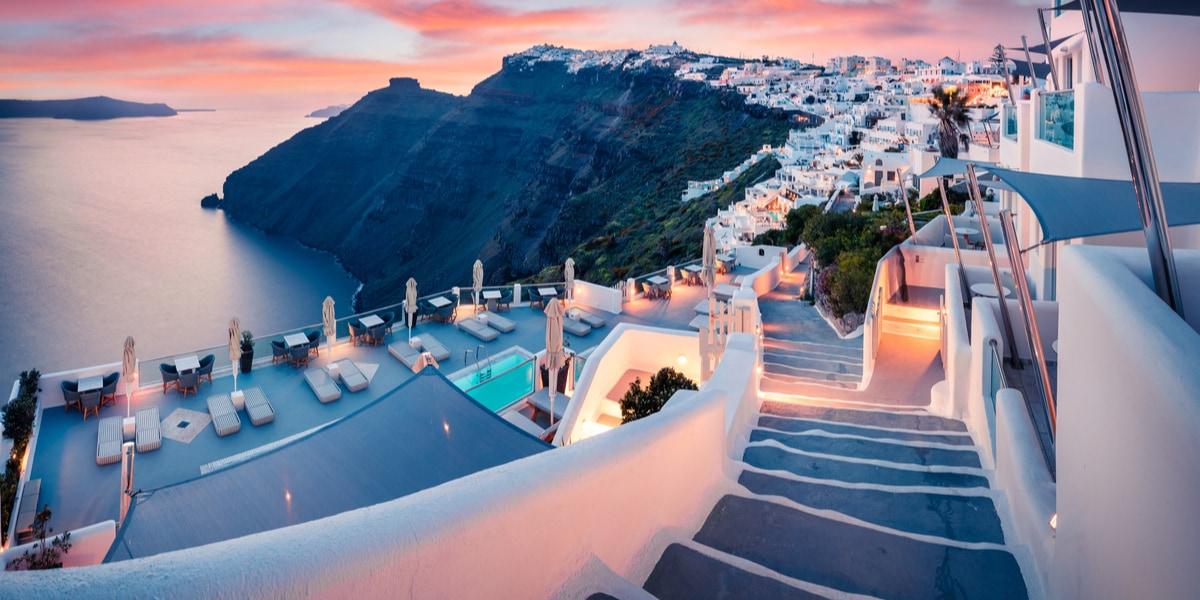
Santorini is one of the most beautiful islands in Greece and is the perfect place to watch spectacular sunsets from its high black cliffs plunging steeply into the blue sea. The island impresses with the view of the caldera, the volcanic crater whose summit collapsed after a gigantic explosion some 3500 years ago.
Villages of whitewashed houses and blue domes overlook the edge of the high, red-brown cliff. Breathtaking views, poignant sunsets and volcanic sandy beaches make this Greek island truly magical. The most elegant of the Cyclades is also an island that knows how to preserve its authenticity. Walking around Fira, you will still see donkeys passing by. Santorini is a Mediterranean fairytale.
Visiting Predjama Castle in Slovenia
 "/>
"/>
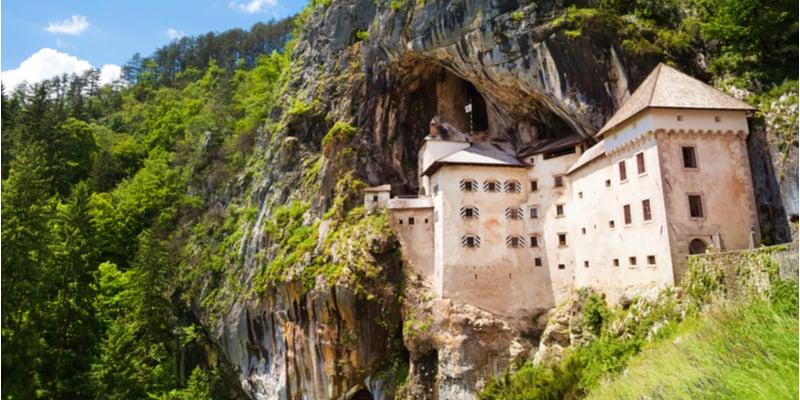
Nestled in a 123-metre-high rock face for 800 years is Predjama Castle, one of the most fascinating castles in the world that looks like something out of a Gothic fairy tale. The castle is a medieval wonder of Slovenia where the creativity of nature is incredibly intertwined with the work of man.
It is a unique castle, chosen several times as a film set, such as for the TV series The Game of Thrones. A castle so romantic that it often hosts wedding receptions. Ancient legends tell that the rebel knight Erasmus of Predjama managed to resist the siege of the imperial army for more than a year thanks to the castle's extraordinary appearance and location. Beneath the castle lie the Postojna caves, connected by underground tunnels and secret hiding places.
Participate in the Venice Carnival
 "/>
"/>
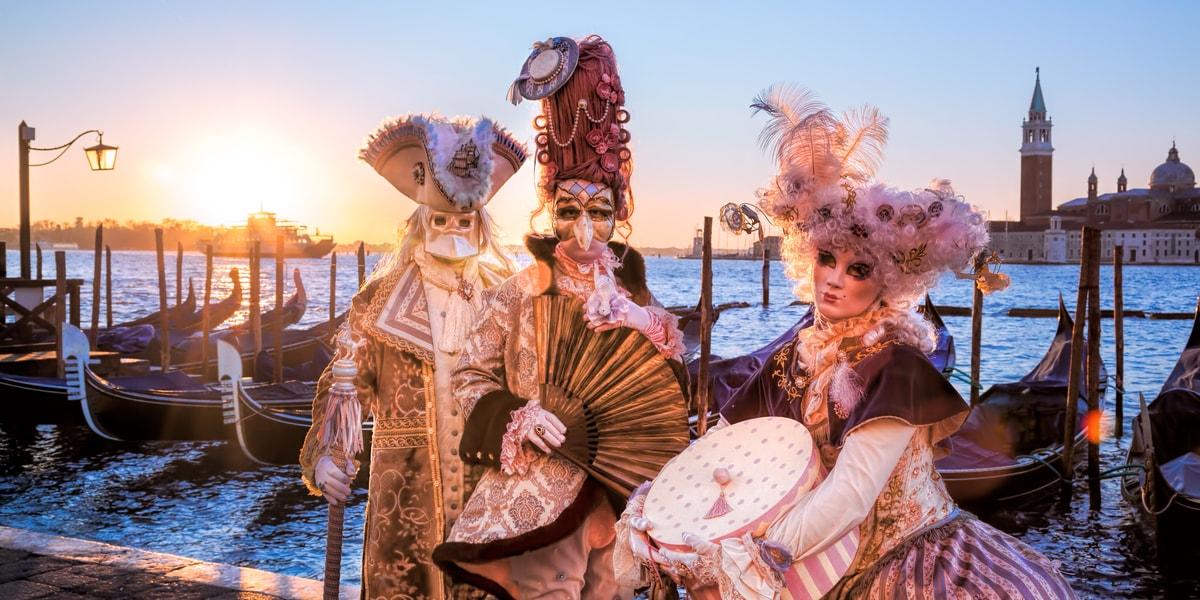
It is one of the best known and most popular in the world. The Venice Carnival is a magical experience to be had at least once in a lifetime. Its origins are ancient. The first evidence dates back to a document by Doge Vitale Falier, dated 1094, in which public entertainment is mentioned and the term carnival is used for the first time.
As in ancient Rome, the Venetian aristocracy felt the need to give the population, especially the lower classes, a period dedicated to fun and celebration. Masks and costumes allowed a kind of social levelling as well as guaranteeing anonymity. Even public mockery of the authorities was therefore authorised, granted as an outlet for the accumulated tensions between the citizens of the Venetian Republic. Even today, you will see the Baùta, the Gnaga, the Moretta and other Venetian masks parading, as well as eccentric modern costumes. Tourists and citizens alike gather in February in Venice to admire the elegance and perfection of the masks, which here constitute an ancient tradition that began with the mascareri, the first official mask-makers of the Serenissima since 1436. For more than two weeks, ladies with precious trains, doges with long cloaks, cardinals, merchants and courtesans circulate dressed in this way through the calli and canals, going about their daily business. Then festivals, concerts, exhibitions and events enliven this period of play, irrationality and madness.
Driving from the Algarve to Porto along the Atlantic coast in Portugal
 "/>
"/>
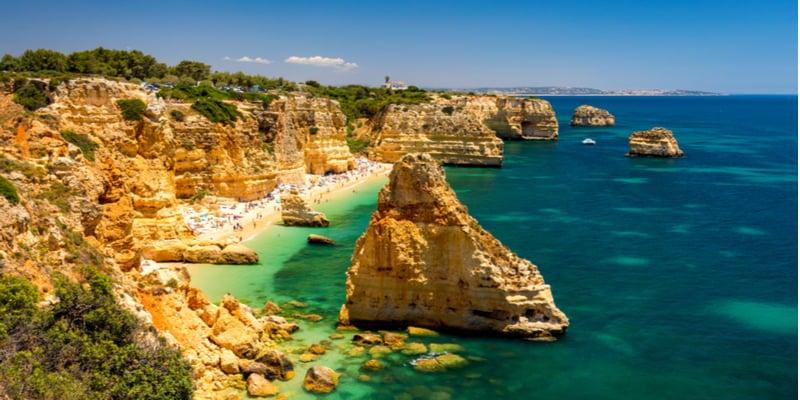
A road trip from the Algarve to Porto along Portugal's Atlantic coast to discover surfers' paradises, medieval villages and towns with decadent charm. We start in Tavira, a town on the eastern side of the Algarve, on the banks of the Gilão River, close to the Spanish border.
On to Faro and then Albufeira, once a fishing village, now a seaside resort with a lively nightlife, then on to Lagos. Both are renowned surfing haunts. Continuing on, you arrive at charming Sagres and Cabo de São Vicente, where majestic cliffs lashed by winds and waves create a spectacular landscape. The lighthouse at the south-western end of Portugal towers over cliffs of incredible colours inhabited only by seabirds.
You then enter the Parque Natural do Sudoeste Alentejano, passing through the village of Carrapateira, the beautiful beach of Bordeira and the small village of Arab origin, Aljezur, to the beach of Arrifana, a stretch of sand in a beautiful inlet ideal for surfing. Continuing up the coast you arrive at Odeceixe, with its white-painted houses, Zambujeira Do Mar, a small fishing village with wonderful beaches, and Vila Nova de Milfontes. So drive to Lisbon and take your time to discover the Atlantic light of this melancholic, poignant and decadent city amidst miradors, yellow vintage trams and uphill streets. You can continue your journey to Cascais, a pretty seaside resort just thirty minutes from the capital, and then on to Sintra where the Palacio Nacional with its fairy-tale atmosphere is worth seeing. Then back on the road to enchanting Porto, where you can taste the famous liqueur wine as you've never had it before.
Taste Sachertorte in Vienna
 "/>
"/>
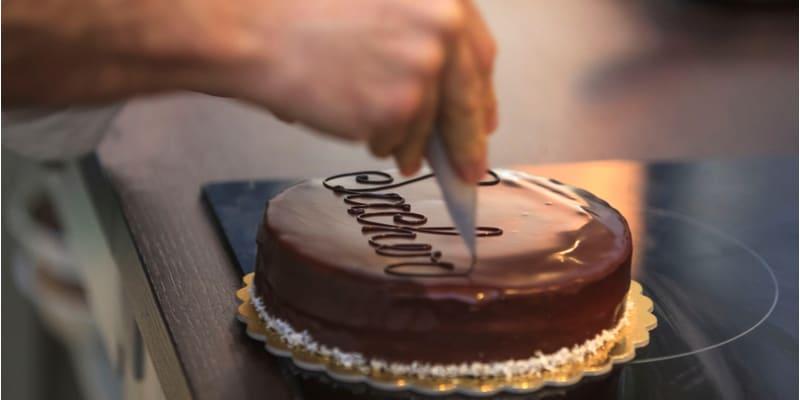
Everyone knows the famous Sachertorte, but few know that it was invented by pastry chef Franz Sacher in Vienna, in July 1832, to pay homage to Prince Klemens von Metternich, in the restaurant-pastry shop of what is now the Hotel Sacher, a member of The Leading Hotels of the World group.
There is no need to stay at the hotel, just sit at its café and treat yourself to a moment of pleasure. The Sacher is a cake made of a double chocolate sponge cake, interspersed with a layer of apricot jam. The outside is then glazed with dark chocolate. At Café Sacher, amidst stuccoes and elegant chandeliers, it is served with whipped cream next to it, as is the tradition. But there are many historic cafés in Vienna where you can taste Sachertorte, including Café Landtmann, a historic Viennese café dating back to 1873. The Sachertorte is worth the trip.
Visit Paris in the snow
 "/>
"/>
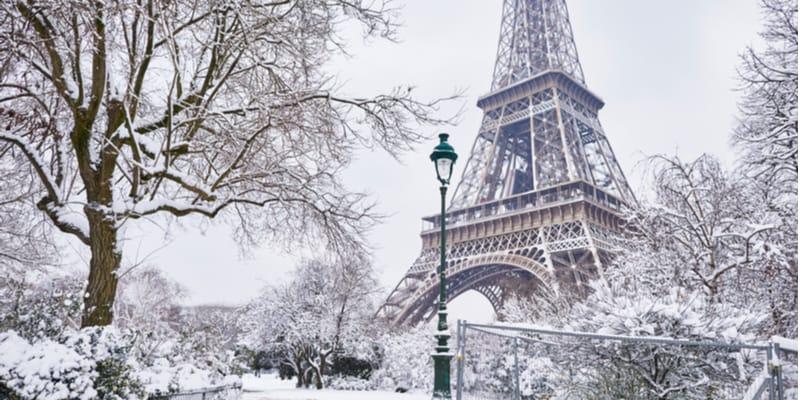
Paris is always a good idea, but in winter it becomes truly magical when the lights shine brighter against the milky white sky and the silhouettes become more elegant. Just imagine the Ville Lumière whitewashed with snow, ice-skating rinks on the Arc de Triomphe, heated panoramic terraces where you can have a cocktail with a view, the pleasure of taking refuge in a restaurant with a fireplace, in a grand hotel spa, in a historic café where you can order hot chocolate, in a cinema at the end of the day.
Parisians don't care how cold it is outside because life explodes inside. So arm yourself with heavy coats and enjoy Paris in winter: a dream of elegance, beauty and poetry.
Partying in Ibiza
 "/>
"/>
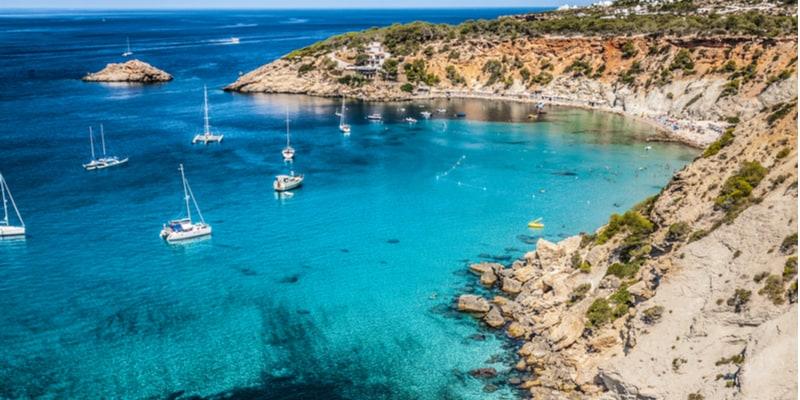
Ibiza, or Eivissa, is internationally recognised as the ultimate party island. It is an extreme island, both in terms of its landscape and the type of tourism it attracts.
In the 1960s, Ibiza began to attract visitors for its beautiful beaches and quiet atmosphere.
It became a destination for European hippies in search of a secluded place to connect with the universe. Today the island has 143,000, residents but in summer welcomes thousands of visitors in search of sun and parties, including new hippies, nudists, jet setters and party animals. Ibiza town is the island's capital, located in a natural harbour on the south-eastern coast. The city boasts a charming old town surrounded by ancient walls, the Dalt Vila, a Unesco World Heritage Site, perched atop a hill overlooking the entire area. Ibiza town is also one of the hubs of nightlife, with hotels, restaurants and legendary clubs such as Pacha. But Ibiza is all one continuous party. The most famous clubs, scattered all over the island, are Privilege, Amnesia, Es Paradis, Eden, El Divino, DC10 and Space.
If you want to have a detailed calendar of all the scheduled parties, have a look at the Ibiza Spotlight website. Be aware, however, that fun in Ibiza is not cheap, entry to most clubs is between 50 and 60 euros, but around the island you will be given leaflets with discounts. After the crazy nights it is worth waking up at a decent hour to relax on the most beautiful but also busiest beaches in the south of the island. Here you will find Platja de ses Salines, a wide sandy beach frequented by party crowds, Platja d'es Cavallet, Ibiza's official naturist beach, the famous Playa d'en Bossa, Sa Caleta with its red cliffs, and the enchanting Cala d'Hort with its renowned restaurants. But Ibiza has around 80 beaches, so explore the others on the west coast and the wild northern shoreline.
Travelling on the Bernina Red Train, Italy-Switzerland
 "/>
"/>
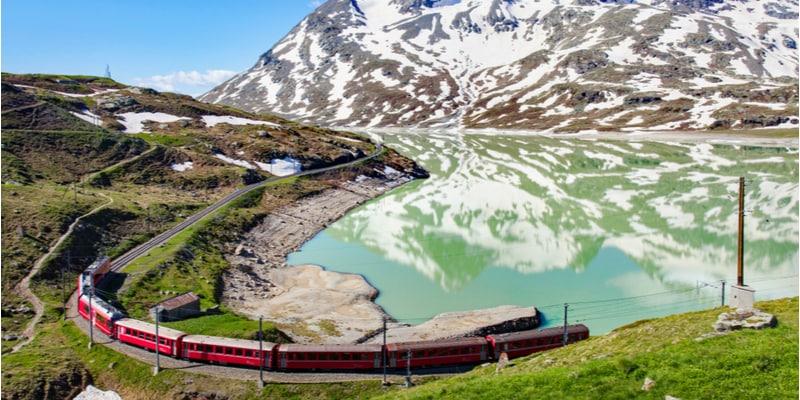
Known the world over, the Bernina train connects the Italian terminus, Tirano, in Lombardy, to the renowned Swiss Engadine resort of St. Moritz. The Little Red Train, so nicknamed because of the flaming colour of its wagons, is a jewel belonging to the Rhaetian Railway, and has been a UNESCO World Heritage Site since 2008. For more than 100 years, the historic little train has traversed vast grassy pastures in summer that become vast expanses of snow in winter, then glaciers and Alpine lakes.
During the approximately two and a half hour journey, an audio guide in four languages explains the wonders of the landscape. The Bernina Express also holds the record as Europe's highest train, but also as Europe's slowest express train. The little red train, in fact, climbs the Alps without the use of a rack railway, starting from Tirano, in Valtellina, at 429 metres above sea level, to reach the high altitudes of Ospizio Bernina at 2253 metres, the highest point of the Rhaetian Railway, and finally descending into the valley of the river Inn, the upper Engadine, to St. Moritz, the cradle of winter tourism. A journey recommended for all seasons: if you are not satisfied with the regular carriages, you could reserve a seat on board the convertible carriages in summer or the panoramic carriages with domed windows in winter for a wider view of the panorama.
Skiing in the Dolomites in Italy
 "/>
"/>
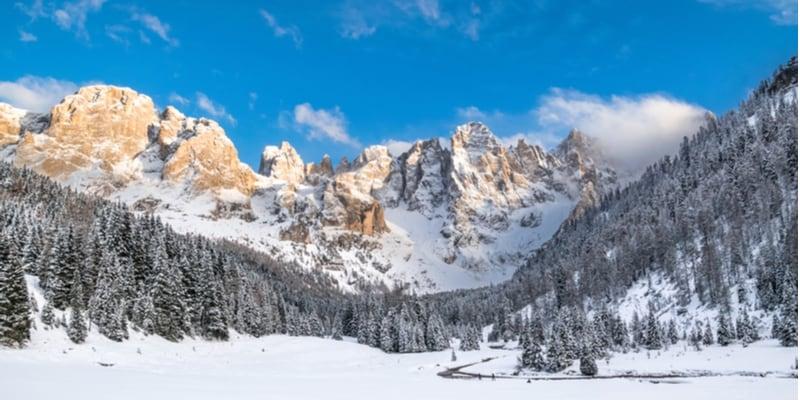
"What are these mountains?" the British naturalists Gilbert and Churchill asked themselves in the 19th century. The same question is still asked today by many visitors who are amazed by the beauty of the Dolomites, named after the French scientist Dolomieu, who first studied the secret mineral that makes them up: dolomite.
They are also called Monti Pallidi (Pale Mountains) according to a legend that tells of a prodigious spell that occurred at the time of the ancient Kingdom of the Dolomites, when the rock of the mountains had the same colour as the surface of the moon.
Declared a UNESCO World Natural Heritage Site, the Dolomites enchant with their unique landscape where majestic peaks, whitewashed in winter, dominate crystal-clear lakes and green valleys that host picturesque villages of Ladin culture. The Dolomites are a paradise for skiers, as well as for hikers in summer. The Dolomiti Superski is the world's largest ski carousel, covering 3,000 km² in the Triveneto region and comprising 1,246 km of slopes. Therefore, skiing in this spectacle of white peaks touching the sky is an experience to be had at least once in a lifetime.
Swimming in the crystal clear waters of the Spiaggia dei Conigli in Lampedusa
 "/>
"/>
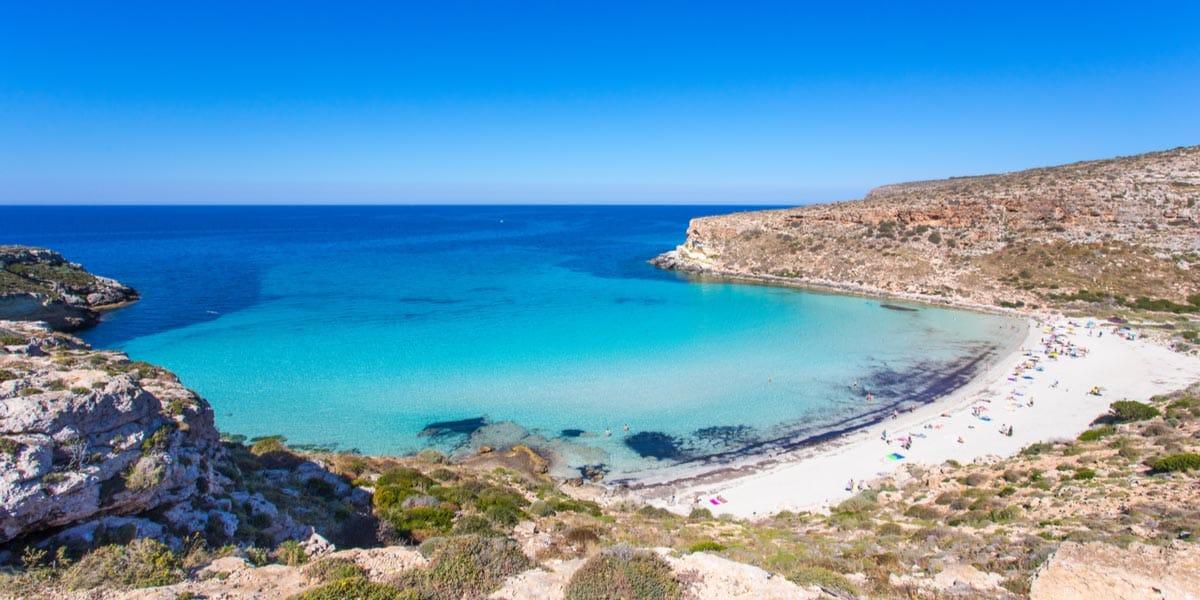
The Caribbean in Sicily. Conigli Beach is the most beautiful beach in Sicily and is considered among the most beautiful in the world. White sand, shallow turquoise waters and a fairy-tale cove, Conigli beach will dazzle you with light and splendour from the top of the path leading to the beach. Situated south-west of the island of Lampedusa, Conigli beach is a protected nature reserve, therefore not easily accessible to all, and therefore still unspoilt.
It can be reached by a 15-20 minute walk along a path through the Mediterranean maquis or by sea. You will find yourself in a wide bay of very clear sand in front of which is the islet of rabbits, the kingdom of the herring gull, which has a population of about 100 pairs. As you walk along the sand, you might catch a glimpse of the footprints of the Caretta Caretta turtle, which often chooses this wonderful beach to lay its eggs. And so stepping into the crystal-clear turquoise water with its extremely shallow seabed, you will find yourself walking on water in this corner of paradise where mobile phones don't pick up and the world seems far away.
Way of Santiago
 "/>
"/>
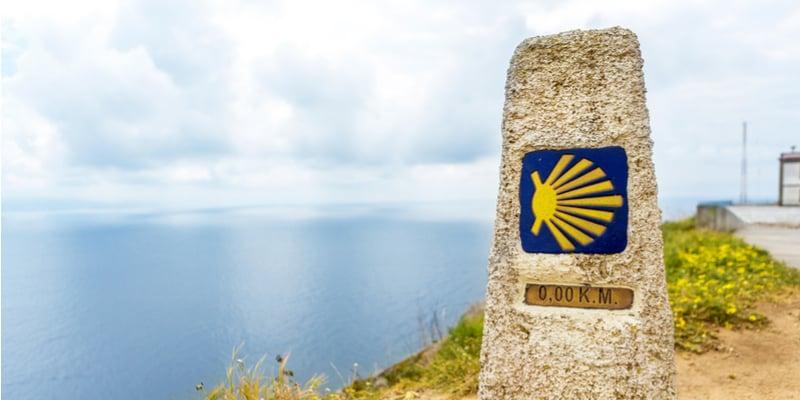
Rediscover the slow journey along the Pilgrim's Way to Santiago, on foot or by bicycle. The advantage of crossing it by pedalling is to reduce the journey time and see more places.
Created after the discovery of the relics of St James the Zebedee, or the Greater, in the early 9th century, the pilgrimage to Santiago de Compostela became one of the most famous in medieval Christianity from the 11th century onwards. Santiago was later declared by Pope Alexander VI as the site of one of the three great pilgrimages of Christianity, with Jerusalem and Rome.
The route is 800 km long and is divided into several stages. The different routes to do the Pilgrim's Way to Santiago by bike are the French route, normally divided into 12 or 13 stages totalling 50 or 60 km per day, the Via de la Plata starting in Seville, the northern route that runs along the Cantabrian Sea and through the Basque Country to Galicia, the Portuguese route that starts in Lisbon, and finally the primitive route, the most difficult to do by bike due to the climbs, stone paths and sections of steps.
Destinations
Low Cost News