
 Advertising Info
About Jewish Woman Magazine
Join our Community
Advertising Info
About Jewish Woman Magazine
Join our Community| Home |  |
Spirituality & Traditions | |
Successful Women | |
Book Group | |
Food & Recipes | |
Social Action Agenda | |
Family & Lifestyle | |
Marketplace | |
Philanthropy & Giving |

|
|
Successful Women |
|
|
 WINTER ISSUE 2002 WINTER ISSUE 2002
|
||||||
|
|||||||||||
|
|
||||||||||
|
|
|
|
|
|||||||
|
A Magical Pursuit The Satisfying Art of Writing Children's Books By Rahel Musleah
A bear wrapped in a tallit blows a shofar. Two children run away from home and hide out in the Metropolitan Museum of Art. Naamah, Noah's wife, gathers the seeds of every flower and tree and replants the earth after the flood. A guinea pig named Peewee finds freedom in Central Park. A baby enjoys being inside her mother so much that the family must persuade her to be born. Welcome to the world of children's books. Whether fanciful or realistic, set in Narnia, Oz, or the Lower East Side, that world is magical to both the children who read the stories and the writers who create them. It's a world that simultaneously provides comfort and escape, entertainment and subtle education, adventure and a sense of home.
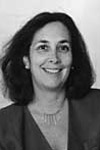
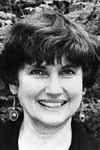
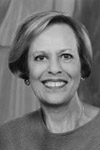
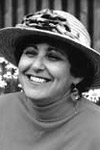
Anyone who has ever read a picture book to a child has probably thought, 'Oh, I could do that.' For writers of children's books, however, the seeming effortlessness is a craft. "It's like Sarah Hughes skating," says Johanna Hurwitz, author of more than 60 children's books. "Only when someone stumbles do you see that it's hard. I write and rewrite, just as Sarah Hughes practices for hours a day." Writing is not a job but a passion, say the writers interviewed for this article, a need as basic as air or water. "I'm crazy about writing," says Fran Manushkin, author of more than 30 books. "But I don't write for children. I write so the child in me can have a good time." Kids want the same things adults want, she continues: wonderful stories, great dialogue and engaging characters. Jewish women like Hurwitz and Manushkin rank high in the pantheon of children's writers. So J. K. Rowling isn't Jewish, but Judy Blume is, and her books have sold more than 75 million copies worldwide. No genre remains untouched by these authors' colorful and often humorous inventiveness—picture books, chapter books, young adult novels, folk tales, biography, historical fiction. The paths to their popular and prolific output differ: some knew from childhood that they wanted to be writers; some pursued other careers first. Some come from Orthodox backgrounds but don't write much about Judaism; others were raised in secular homes and do. Their ideas come from their lives, their children, the newspaper, and their imaginations. Several authors have forged reputations on books that are unquestionably Jewish. Jane Breskin Zalben published 18 books before she wrote and illustrated Beni's First Chanukah, but she's now known for her Beni series, which follows a bear family through Jewish holidays and celebrations. Barbara Diamond Goldin didn't start off writing Jewish stories, but after five years of rejections, they were the first ones that sold. "In a writer's workshop I was told, 'write what you know,'" she says. "I had a wonderful Jewish upbringing, so I wrote about my holiday experiences. I wrote to process my own family stories." Of Goldin's 18 books, 15 reflect Jewish themes; she has received the Sydney Taylor Body of Work award from the Association of Jewish Libraries. Both Zalben and Goldin enjoy researching other cultures, and feature customs and stories from religions and ethnic groups around the world. The spare language of children's books does not necessarily imply elementary concepts. Rabbi Sandy Sasso's books help children think and talk about God, address themes such as anger and violence through modern midrash, and give voice to biblical women. Sasso, the first Reconstructionist woman rabbi (ordained in 1974), who has been at Congregation Beth-El Tzedeck in Indianapolis for 25 years, says children have rich spiritual lives and numerous theological questions that shouldn't get short shrift. Sasso's first book, God's Paintbrush, is also her best seller, having sold an astounding (for a Jewish children's book) 75,000 copies. While the authors profiled here have already achieved considerable success, writers such as Mira Wasserman are poised to make their debuts. Wasserman, 31, also a rabbi and the mother of two children, ages four and one, will have her first book published by Kar-Ben (now a division of Lerner Publishing) in 2003. Titled Too Much of a Good Thing, the book grew out of Wasserman's storytelling sessions at her congregation, Beth Shalom in Bloomington, Ind. "I have stacks of stories," she says. "This is the first one I sent out. If the story is fun, suspenseful and has likable characters, the message doesn't overwhelm." Whether or not books by Jewish authors have overtly Jewish themes, their sensibilities reflect a distinctive Jewish voice. "I have brown eyes and I'm Jewish," says E. L. Konigsburg, who has twice received the New- bery Medal, the highest children's book honor. "I see the world through my brown eyes and I see the world through being Jewish. It's part of who I am." In fact, the Jewish children's book market has flowered in the past two decades. At one time, a Chanukah story was hard to find; today, almost every publisher has at least one. Holidays predominate, largely because that's what sells at the gift-giving seasons of Chanukah and Passover. Despite the plethora of Jewish books now available, most authors and editors optimistically agree that there's always a new way to look at an old idea. The recent bottom-line trend among trade publishers, however, has caused considerable belt-tightening in children's publishing. Many publishers have merged into vast conglomerates; giant bookstore chains have led to the subsequent collapse of many small, independent booksellers. Editors themselves have to garner the approval of their marketing departments, especially for picture books that may typically cost $50,000 to produce and have to sell at least 10,000 copies. "It's a challenging market, says Stephanie Lurie, president and publisher of Dutton Children's Books. "A few books break out in a huge way, but the mid-list has a harder time. Jewish books are feeling the squeeze of that mid-list. Editors are still interested as long as a book has a holiday tie-in or a universal theme that transcends a Jewish audience." Lurie also notes the need for "uplifting" Jewish books, especially in fiction for older readers. "At Jewish book fairs with my own son, who's 13, we ask, 'Isn't there anything else besides Holocaust stories?'" "We don't need another Hanukkah or Chelm story," says Judye Groner, co-founder of Kar-Ben. "But there certainly aren't enough books on the issues Jewish families face today—intermarriage, divorce and remarriage, multi-racial Jewish families, and being Jewish in a Christian world." Carolyn Starman Hessel, director of the Jewish Book Council, cites a need for books to be read in early childhood programs. "If we can nurture the spark of Judaism at that age, we have more hope for the future." The daunting business of earning a living as an author causes most to juggle jobs as teachers, librarians, editors, and art directors while they launch their writing careers. Many never give up their day jobs. "Don't become a writer to make money," warns Manushkin. "When you write you have to be a sensitive soul, and then you have to be a samurai prepared for rejection." Working at home can be a double-edged sword, adds Zalben. "You can raise your children, make soup, and do the laundry, but that also makes it impossible sometimes." Once successful, however, authors frequently travel the country and the world, speaking, teaching, and meeting with editors, teachers, and children. "The peripheral rewards are staggering," says Konigsburg. What would they advise aspiring writers? "Don't say 'someday,'" suggests Hurwitz. "Just do it. Start." "One word," says Konigsburg. "Finish. The difference between being a person with talent and being a writer is the ability to apply the seat of your pants to the seat of your chair and finish. Even when the next word, the next thought, won't seem to come, you stay until it does." Here are four writers who have both started and finished, and nurtured a generation or more of children along the way. Rahel Musleah is the author of two children's books: Why on This Night? A Passover Haggadah for Family Celebration (Simon & Schuster) and Sharing Blessings: Children's Stories for Exploring the Spirit of the Jewish Holidays (Jewish Lights). Visit her at www.rahelsjewishindia.com. |
|||||||||||
Jewish Women International 2006
2000 M Street, NW, Suite 720
Washington, DC 20036
Please contact Jewish Women International for information about reprint rights
Web development by